As an Amazon Associate I earn from qualifying purchases. This post contains affiliate links. I receive a small compensation from sales of certain items, at no extra cost to you. Read the affiliate disclosure.
Pink kitchen curtains work best when their shape solves a window problem before their color adds a finishing touch. A cafe tier can cover the lower glass while leaving the top open. A valance adds pink at the top but does not cover the view into the room. Full panels suit a breakfast nook better than a busy sink ledge. Start with the window, the privacy you need and the space the fabric can safely occupy, then choose the shade.
This guide focuses on kitchen window treatments, not a kitchen renovation. For cabinets, islands and larger color choices, see our pink kitchen ideas. If you want a smaller, reversible color change, our budget pink home decor guide puts textiles in context.
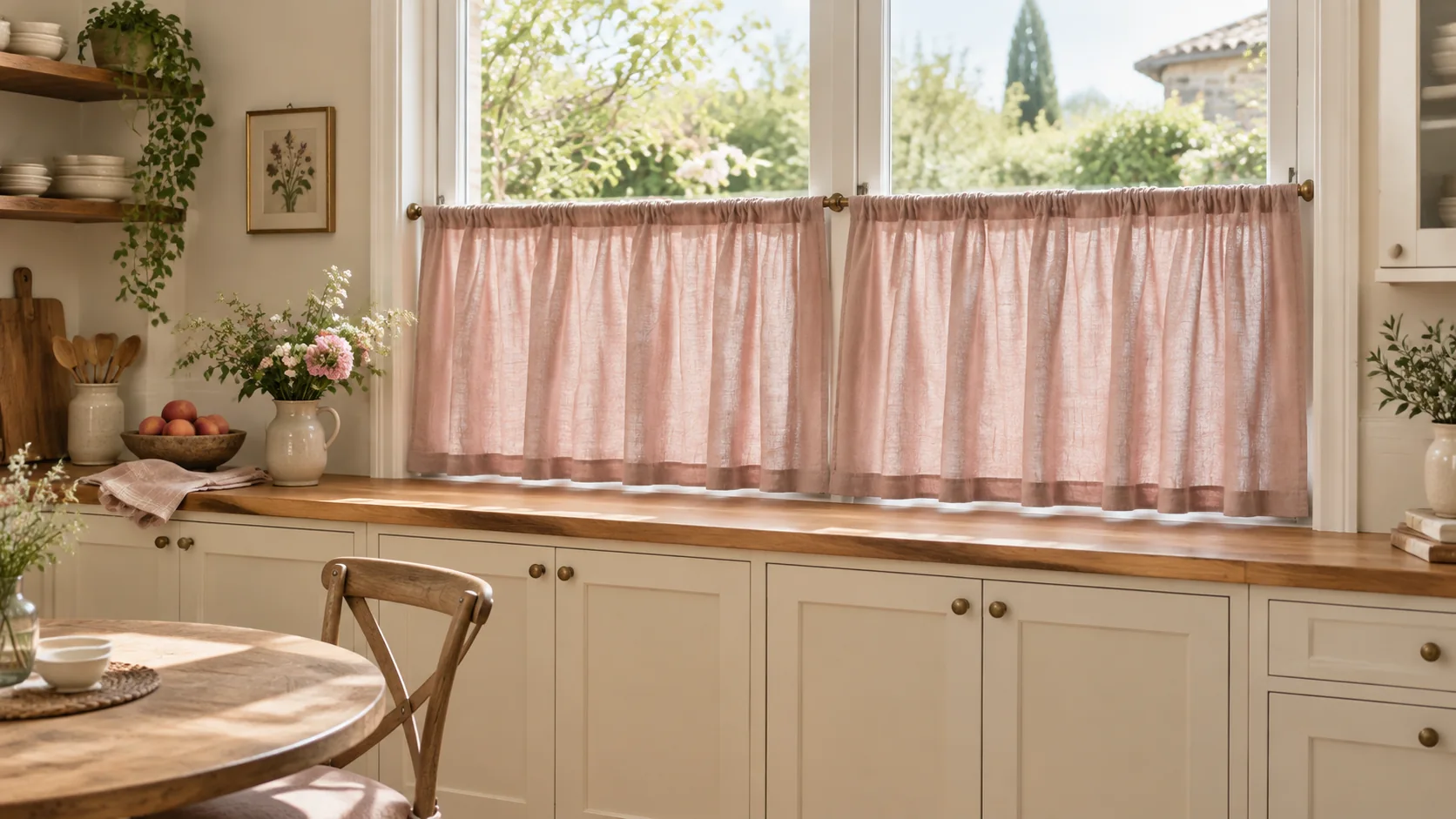
The interior and fabric images in this guide are original AI-generated styling illustrations, not photographs of purchasable products or tested installations. The measuring diagram is an original explanatory drawing.
Choose the curtain shape before the shade
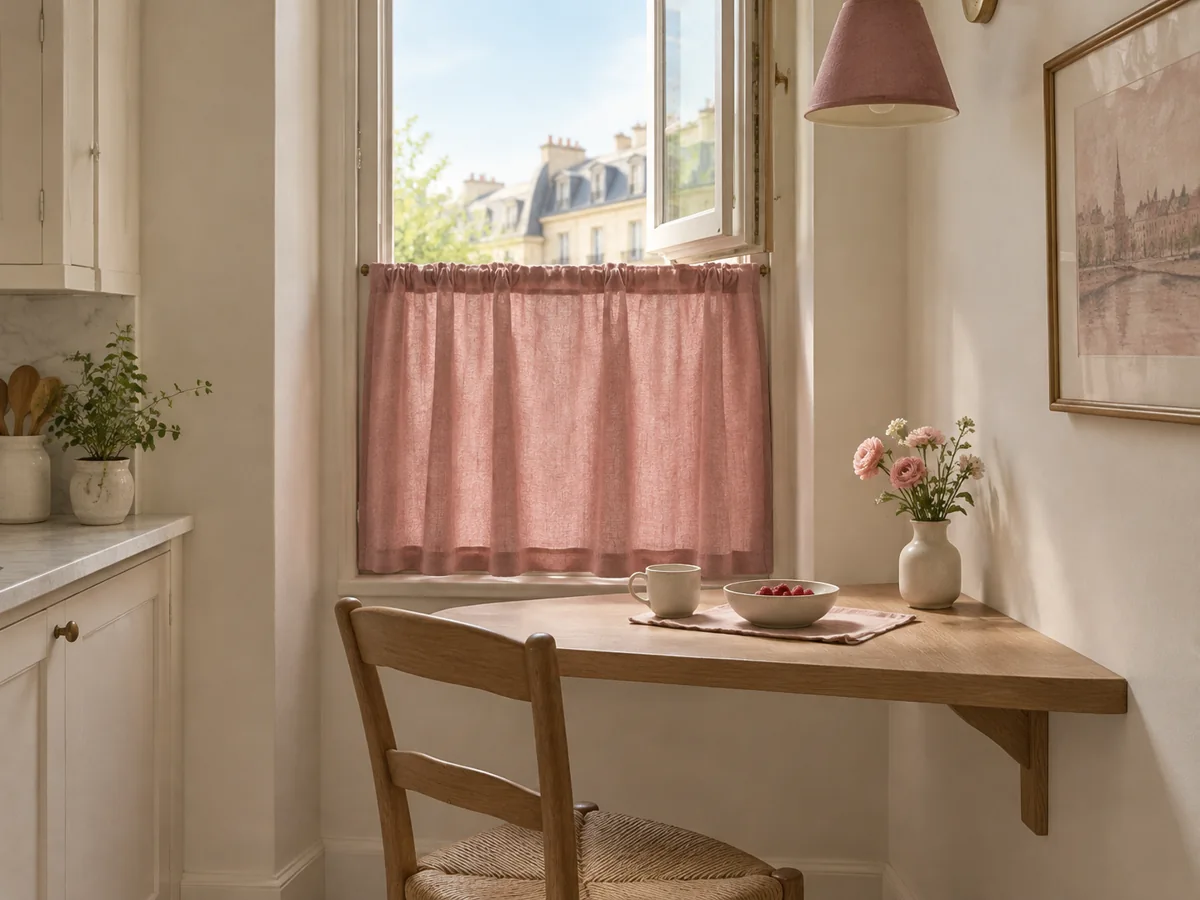
Cafe curtains for the lower part of a window
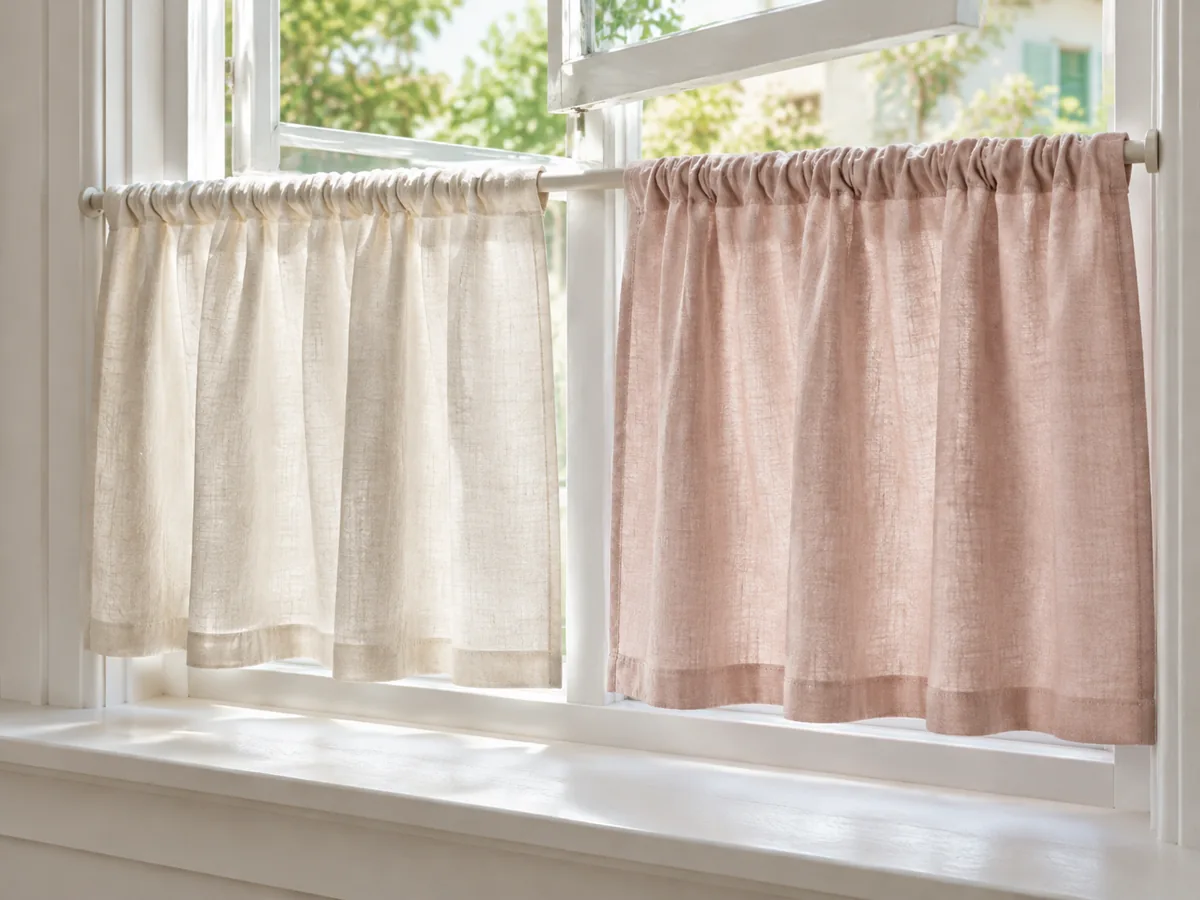
Cafe curtains, also called tiers, hang from a rod partway down the window. They are useful when you want to screen the lower glass without covering the whole window. The right rod position depends on your view, not a rule that every tier must start exactly halfway up. Hold a sheet or fabric sample against the glass and check the sightline from both sides before buying.
A sheer pink tier is a color accent, not a promise of privacy. Test a sample with the kitchen lights on after dark. If screening the room is important, compare less transparent fabrics or a separate privacy treatment rather than assuming a gathered sheer will do the job.
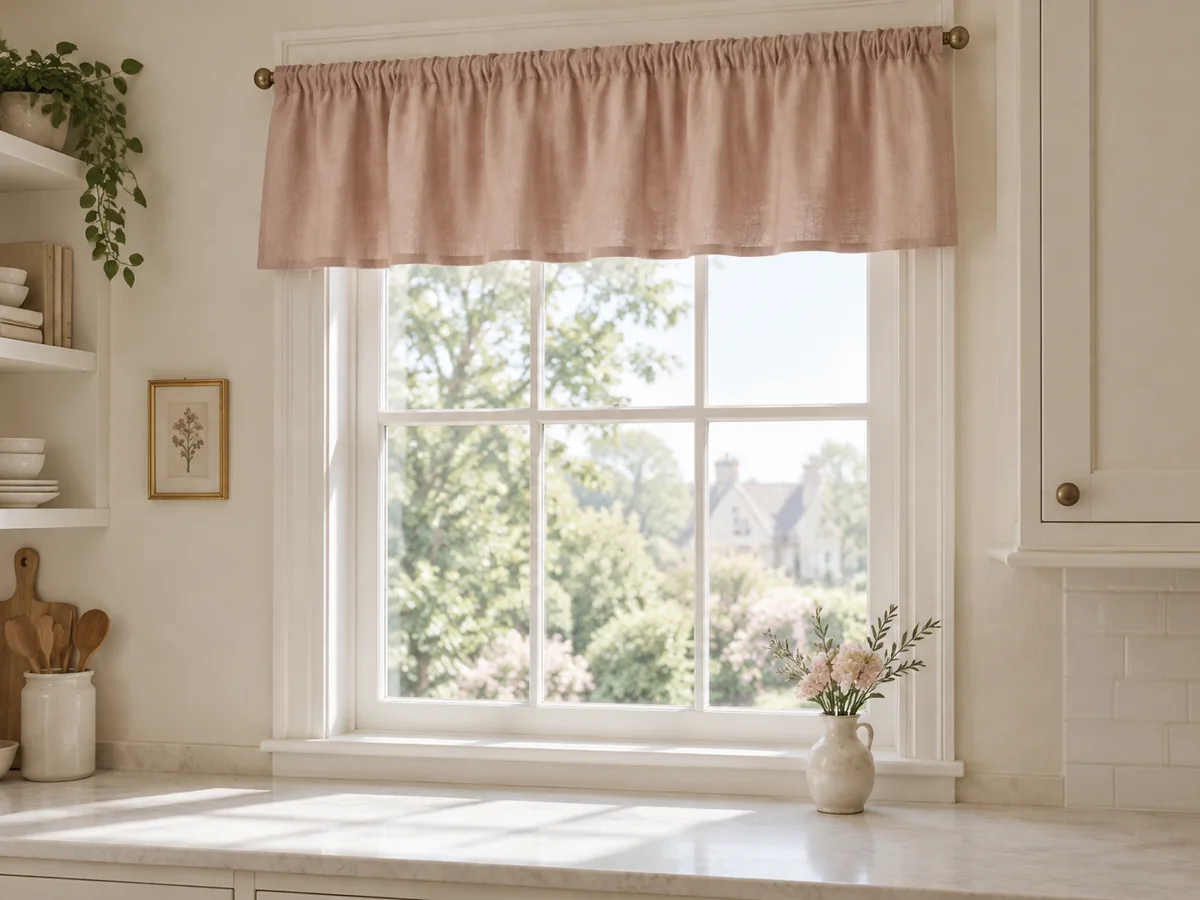
A valance when you only want a pink accent
A valance is the short treatment across the top of the window. It can introduce a pink stripe, gingham check or floral pattern without placing fabric near the sink. It leaves the glass below uncovered, so choose it for decoration rather than lower-window privacy. A deep valance can also cover more glass than you expect. Mark its proposed bottom edge with removable tape before ordering.
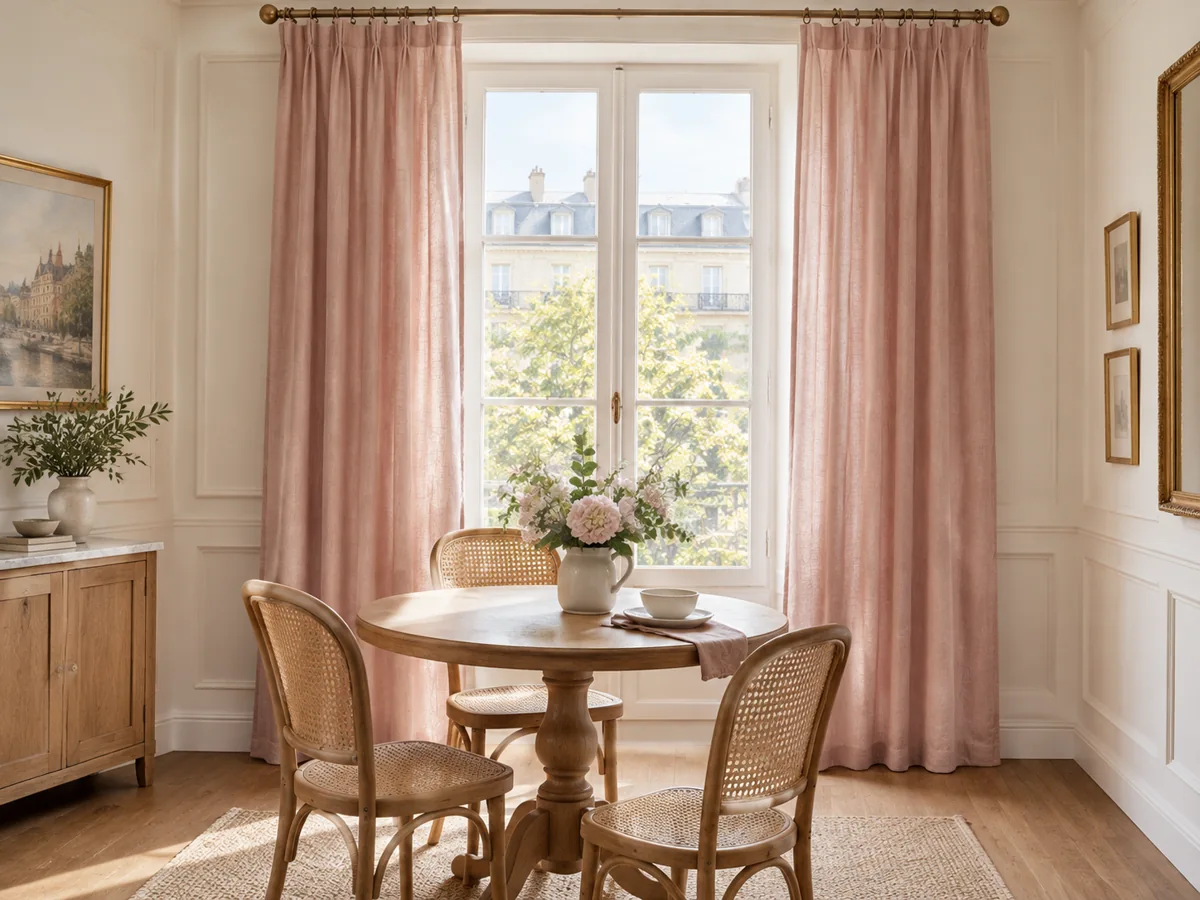
Full panels for a breakfast nook
Longer panels can frame a window beside a dining table when there is room for them to hang and stack back. Check the route to a patio door, chair movement and nearby heating before choosing a length. They are a poor fit where hems would rest on a working counter, trail into water or move toward cooking equipment. If the safe hanging area is too small, leave the window free of fabric and place pink elsewhere.
Match the treatment to the actual window
- Sink window: consider a short tier only if its hem stays clear of the faucet, handles, splashes and counter. A valance may be the simpler accent if lower fabric would get wet.
- Street-facing breakfast window: prioritize the height and opacity of the area you need to screen, then test the fabric at night.
- Small window with limited daylight: compare a shallow valance with a lower tier. Neither should cover useful glass simply to imitate a larger window.
- Wide dining-area window: check whether panels can open far enough to clear the glass. Include their stack-back space in the plan.
- Window close to cooking equipment: follow the appliance and installation requirements. Do not guess a universal safe clearance or treat a short curtain as automatically safe.
Measure for finished curtains, not just the glass
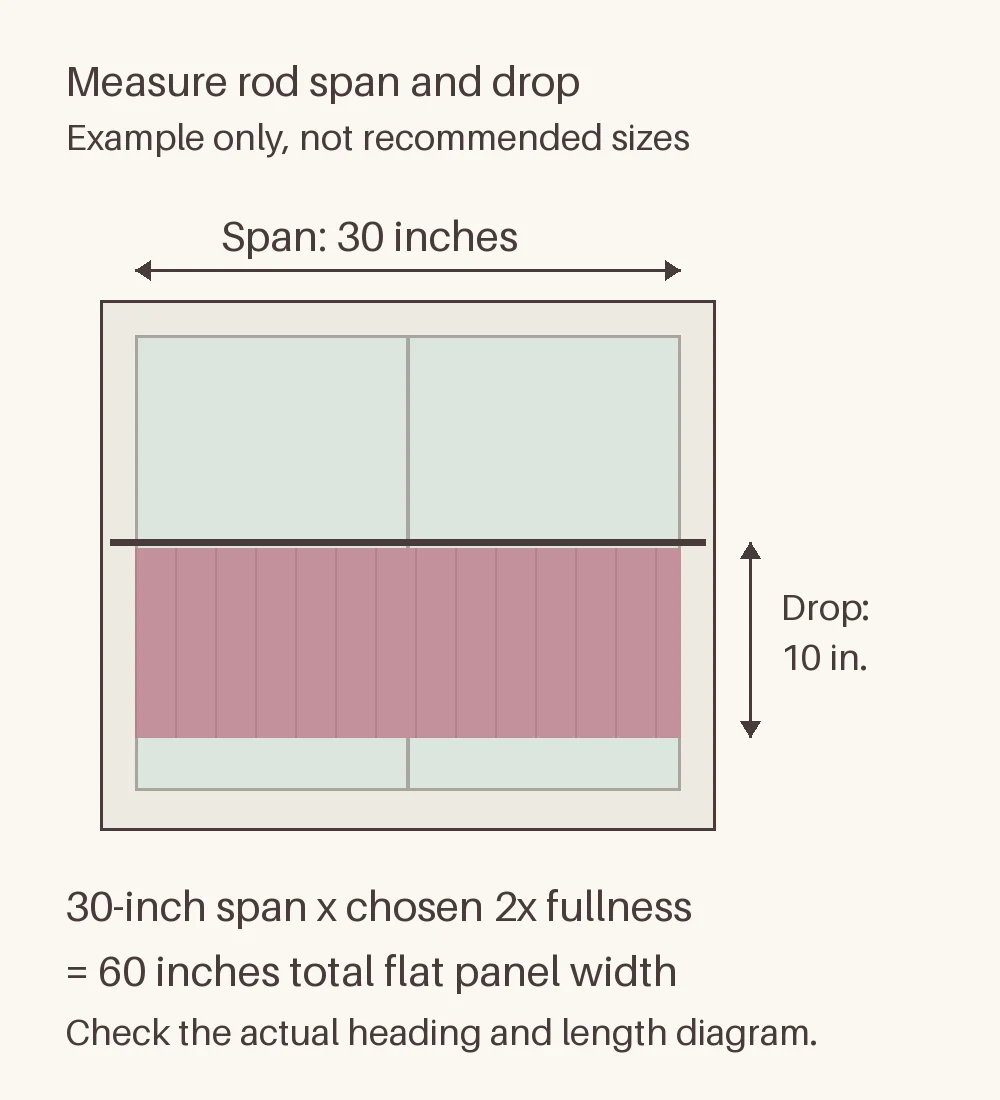
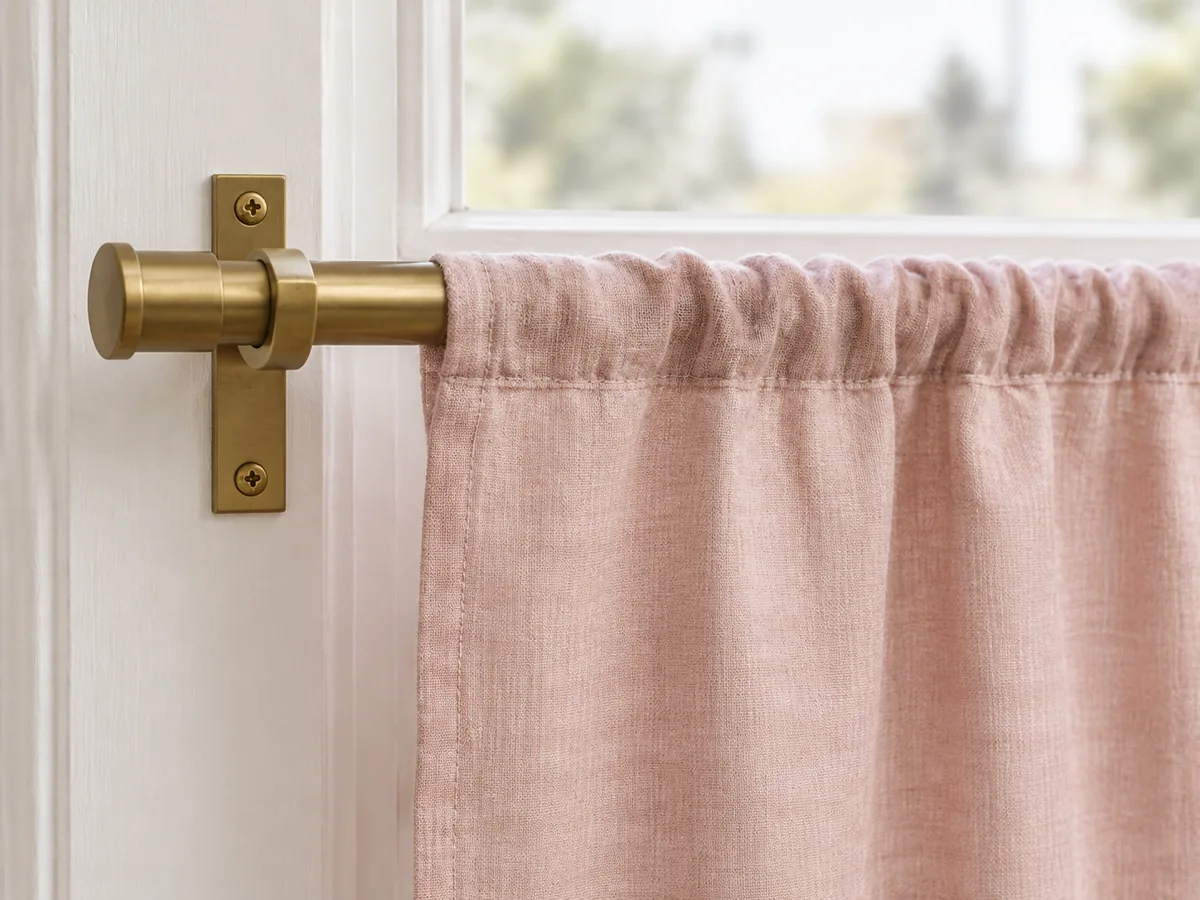
Install or decide the rod position first. Write down the usable rod span, the distance to the intended hem and the way the window opens. Check the latch and handle with the window fully open. For an inside mount, also check the depth and suitability of the frame for the proposed hardware. A tension rod is not automatically suitable for every frame or curtain weight.
- Measure the width the curtain will cover. This may be the rod span rather than the glass width. Record the measurement in inches for US listings.
- Decide how gathered you want it. Use the seller's guidance for the fabric and heading. Do not confuse flat panel width with the width a gathered curtain will cover.
- Calculate total panel width. As an illustration, a 30-inch span with a chosen two-times fullness needs 60 inches of flat finished curtain width. Two 30-inch panels provide that total; one 30-inch panel does not. This is a measuring example, not a universal fullness requirement.
- Check where the listed length starts. Rod pockets, headers, tabs and rings can change where the hem lands. Follow the listing's diagram rather than assuming every seller measures from the same point.
- Read the package quantity. A listing may contain one valance, one tier, a pair or a set. Verify the contents before comparing sizes.
If you sew your own rod-pocket curtains, finished dimensions are not cutting dimensions. Allow for the heading, casing and hems. The Sewing & Craft Alliance's rod-pocket curtain instructions explain those allowances and recommend preshrinking washable fabric when you intend to launder the finished curtains.
Pick fabric by care and coverage
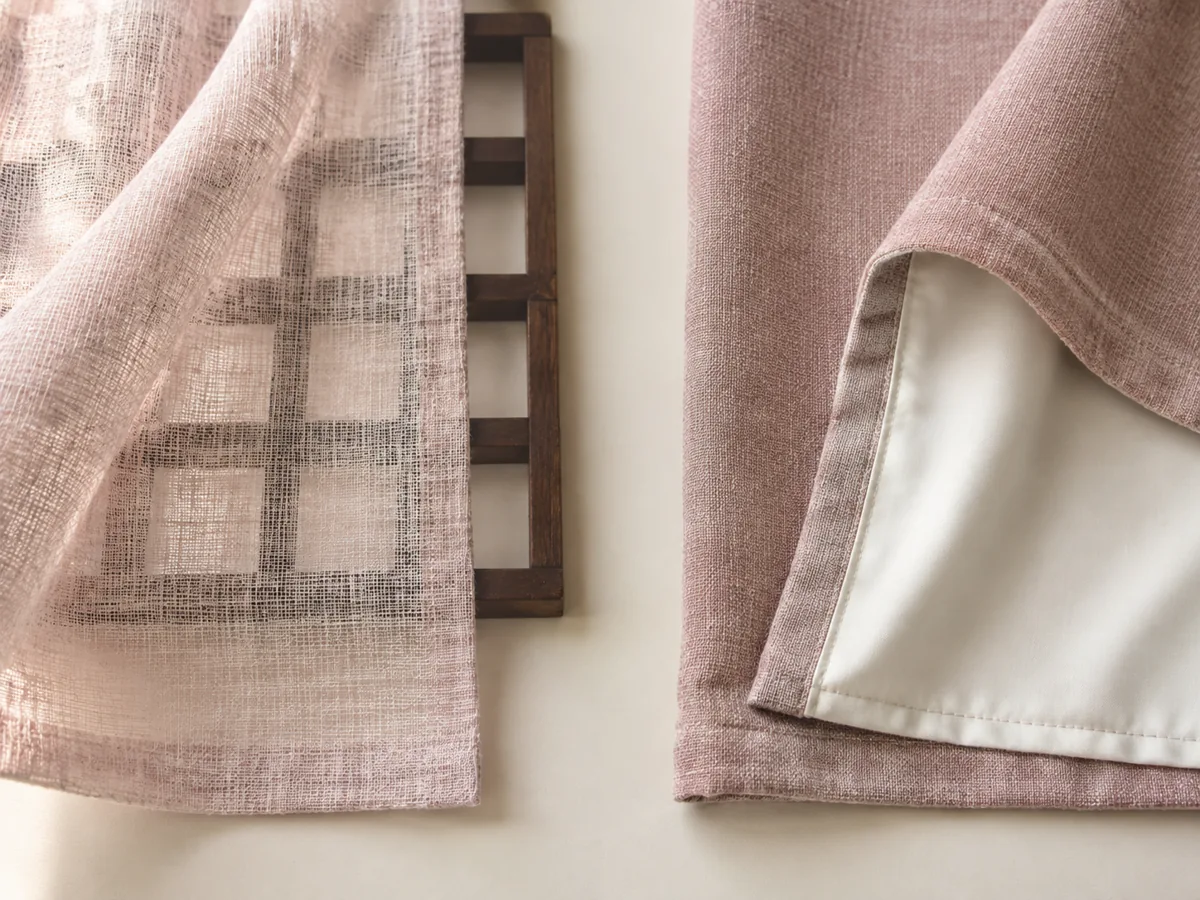
Do not buy by the word “linen” or “cotton” alone. Check the actual fiber composition, opacity, lining and care label. A linen-look fabric is not necessarily linen, and a blend can have different care instructions from another fabric with a similar appearance. Choose a treatment you can realistically remove and clean using its stated method.
For a sink area, inspect where water reaches before choosing any fabric. In a kitchen that gets cooking residue on surrounding surfaces, intricate trim and layers mean more details to clean. A simple heading and an accessible rod may be easier to manage, but the product's cleaning instructions still decide what you can wash. Do not assume every kitchen curtain is machine washable.
Choose a pink that belongs in your kitchen
Bring a fabric sample next to your cabinet finish, counter and wall in daylight and under the lights you use in the evening. A small online image cannot show exactly how the fabric will look there. Compare the pink against the existing surfaces before adding matching accessories.
- Blush with white cabinets: try a plain tier when you want the color to stay quiet. A visible texture can provide interest without a second pattern.
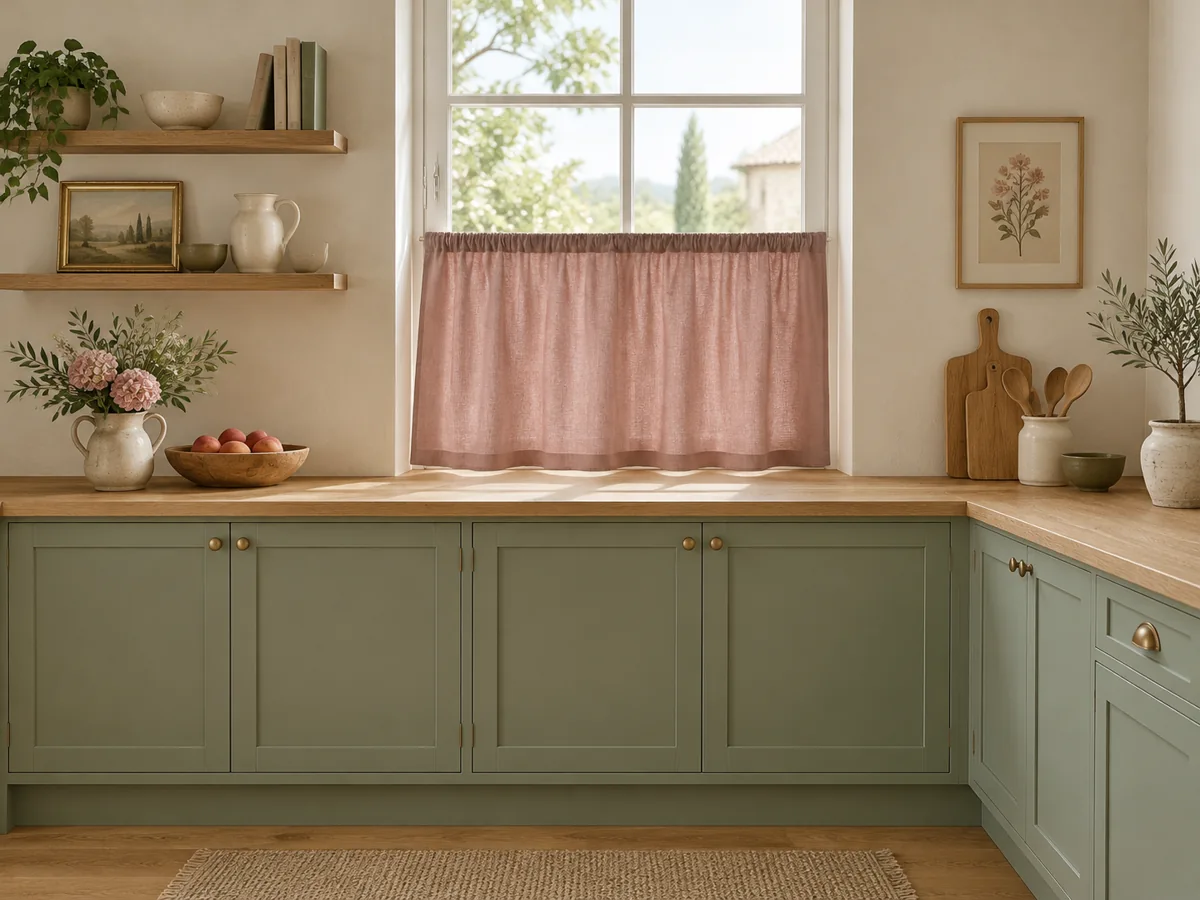
- Dusty rose with wood: compare a muted pink sample beside the wood itself. If both feel too warm together, test a lighter or less saturated fabric.
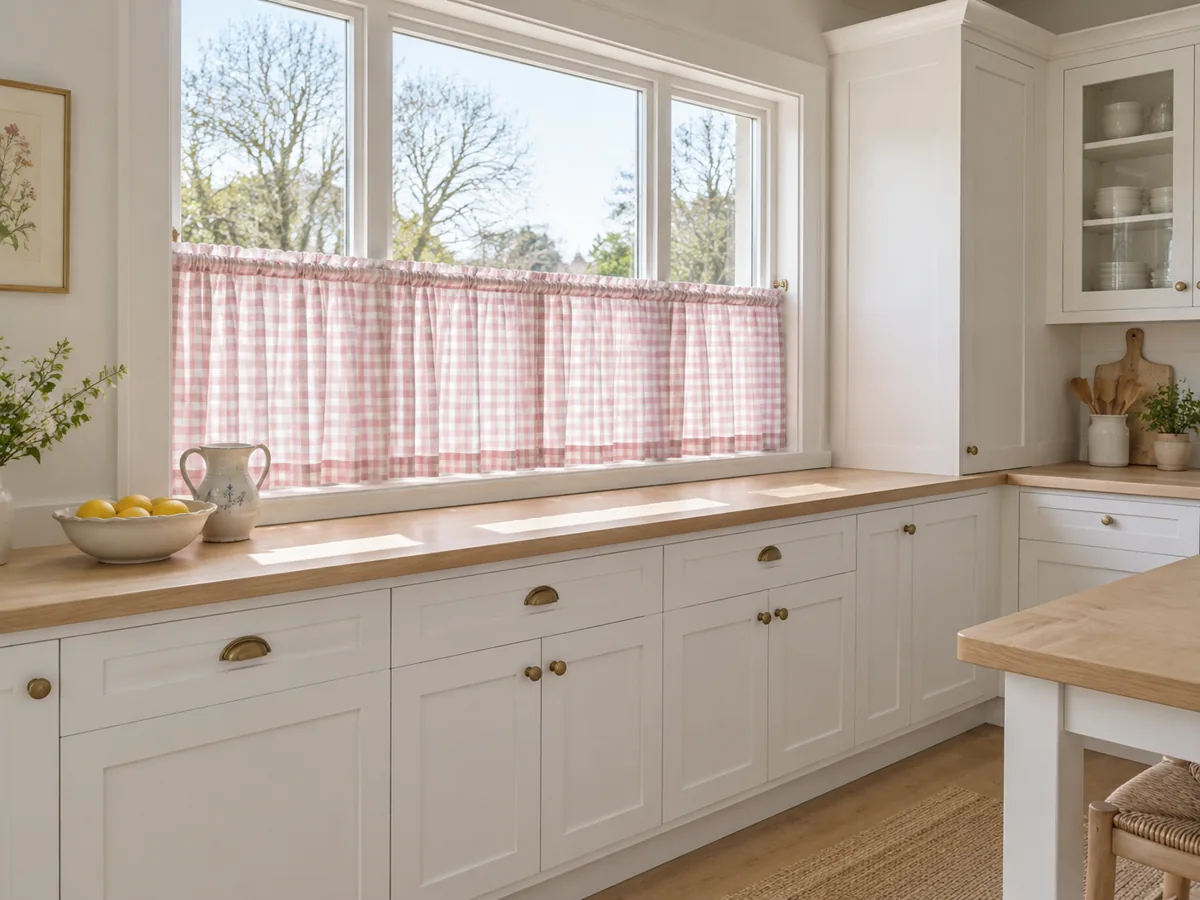
- Pink gingham in a simple kitchen: let the check be the main textile pattern rather than matching it to every towel and tablecloth.
- Pink floral fabric near a patterned backsplash: compare both patterns at normal viewing distance. If they compete, switch to a plain curtain instead of adding more decorative trim.
Check the listing before you order
As an Amazon Associate I earn from qualifying purchases.
Use these as search starting points, not tested product recommendations: pink kitchen cafe curtains on Amazon for lower-window tiers, or pink kitchen valances on Amazon for a top-only accent. Search results can include unrelated styles and change over time.
Before ordering, confirm the selected color, individual panel dimensions, quantity, heading, rod compatibility, opacity and care instructions. Save your measurements separately from the product size. If a listing does not explain whether a width is per panel or per pair, resolve that before buying rather than guessing from the photograph.
A final fit check
Hold a temporary fabric shape at the intended position, open the window, move the faucet and any nearby chairs, and check the view from outside. If it blocks a handle, reaches a wet surface or crowds cooking equipment, change the treatment rather than trying to make the original choice work. A well-fitting pink valance or tier is enough; the rest of the kitchen does not need to become pink to make the window feel finished.