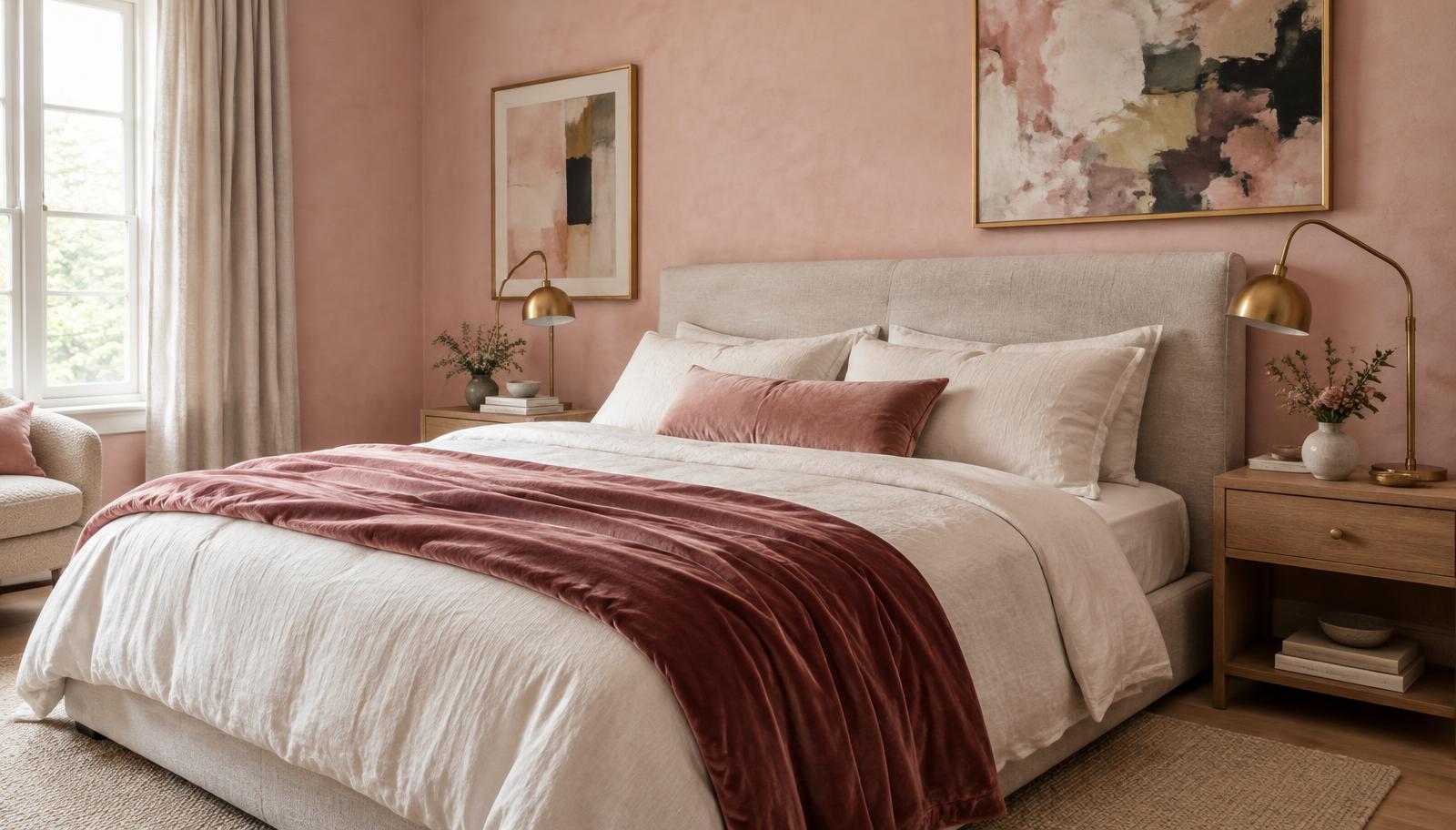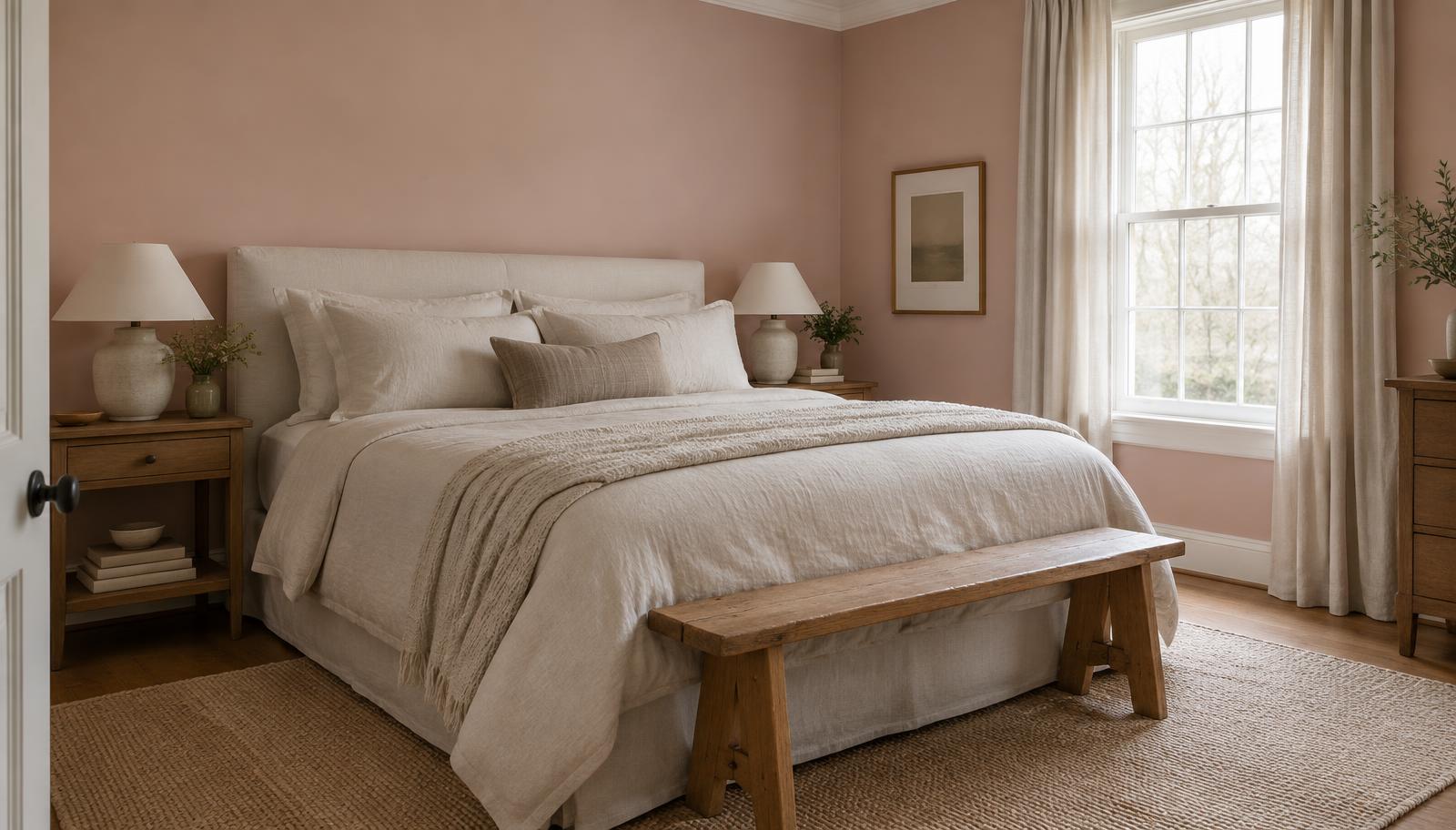
Pink paint can look very different on a swatch and on the wall. The same color can feel peachy in one room and cool in another. This guide explains how to choose a pink for your bedroom and test it before committing.
The short answer
Decide whether you want warm (peachy) or cool (bluish) pink, check which way your room faces, test large samples on two walls for a few days, and choose a matte or eggshell finish for bedrooms.
Warm or cool?
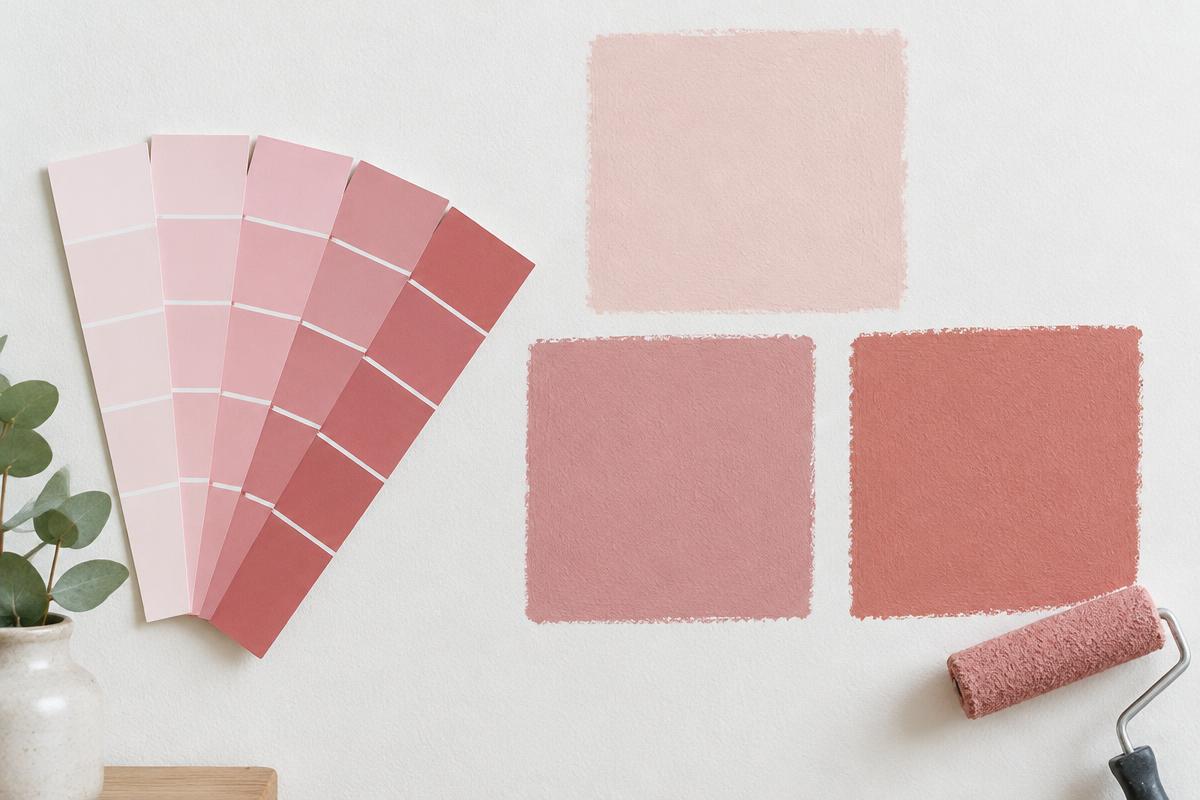
Warm pinks contain yellow or orange and feel cozy. Cool pinks contain blue and can feel fresh or, in some lights, cold. Muted pinks with grey or brown are the most forgiving. Our 50 shades of pink page lists shade names and hex codes for reference.
How light changes pink
- North-facing rooms get cooler light, so warmer pinks help.
- South-facing rooms get warm light, which can make warm pinks look peachy.
- East and west change through the day, so check samples morning and evening.
- Artificial light: warm white bulbs warm up any pink.
How to sample
- Paint large samples on poster board or use peel-off samples.
- Place them on at least two walls.
- Look at them at different times of day for several days.
- Compare them next to your bedding and flooring.
Finish
Matte and eggshell finishes look soft and hide imperfections. Satin is easier to wipe but shows more texture. Follow the paint brand's recommendations.
Two-tone walls and color drenching
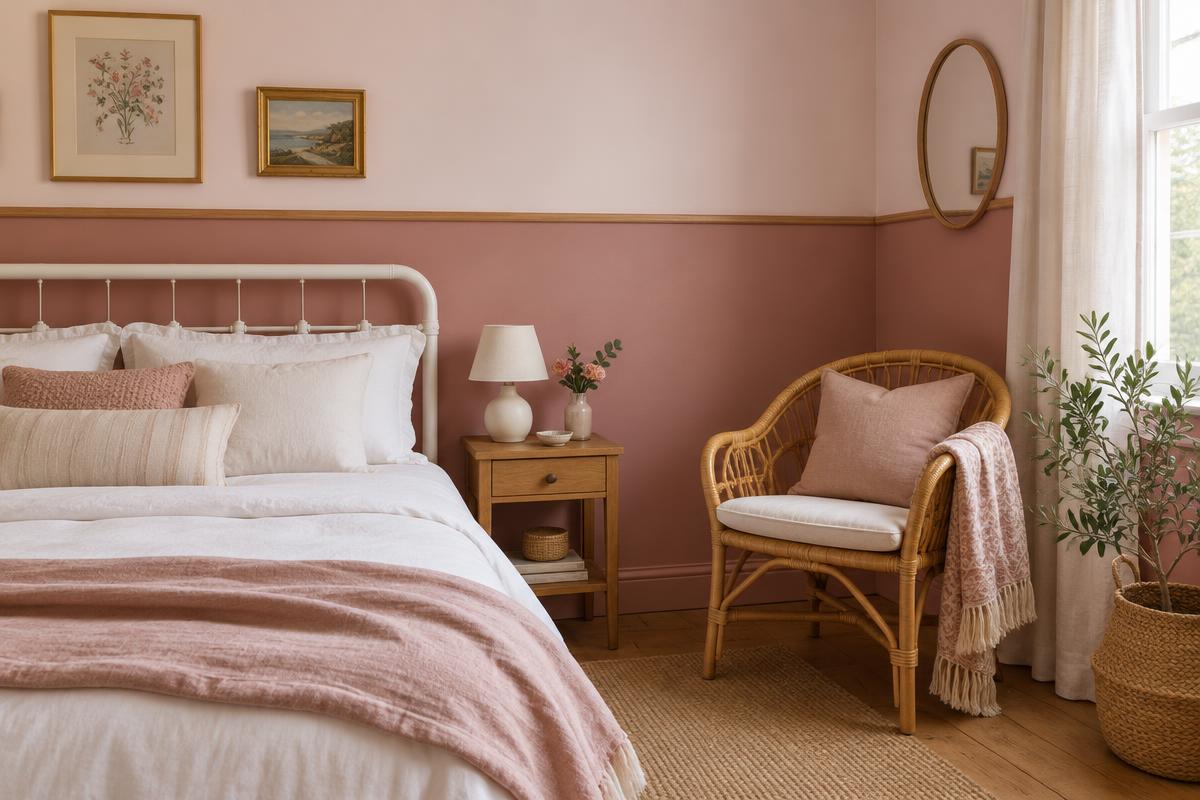
Painting the lower part of the wall a deeper pink with a lighter tone above, as shown below, adds interest. Color drenching, painting walls, trim and sometimes ceiling one color, creates a cocooning effect.
Pull the room together
For bedding and furniture, see our pink bedroom ideas. For pattern, see our pink bedroom wallpaper guide.
Pink families and where they work
| Pink family | Feels | Often suits |
|---|---|---|
| Pale blush | Light, airy | Small rooms, rooms with good daylight |
| Plaster or pink beige | Calm, earthy | Most bedrooms, especially with wood floors |
| Dusty rose | Soft, slightly vintage | Rooms with cream bedding and brass |
| Terracotta pink | Warm, relaxed | North-facing rooms, rattan and linen |
| Deep rose or berry | Cocooning, dramatic | Rooms used mostly at night |
These are general tendencies rather than rules; the same paint will shift with your light, floor and furniture, which is why sampling matters.
What to look for on the color card
Many paint brands publish a light reflectance value (LRV) for each color. A higher number reflects more light and will feel lighter on the wall; a lower number feels deeper. Comparing LRVs between two pinks you like is a quick way to see which is more likely to brighten a dim room. Also look at the darkest strip on the card: it often reveals whether a pale pink leans peach, grey or purple.
Colors to pair with pink walls
- Trim: a warm white or a slightly darker version of the wall color, rather than bright white.
- Ceiling: the wall color lightened, or the same color for a drenched look.
- Accents: olive, burgundy, chocolate brown or deep green.
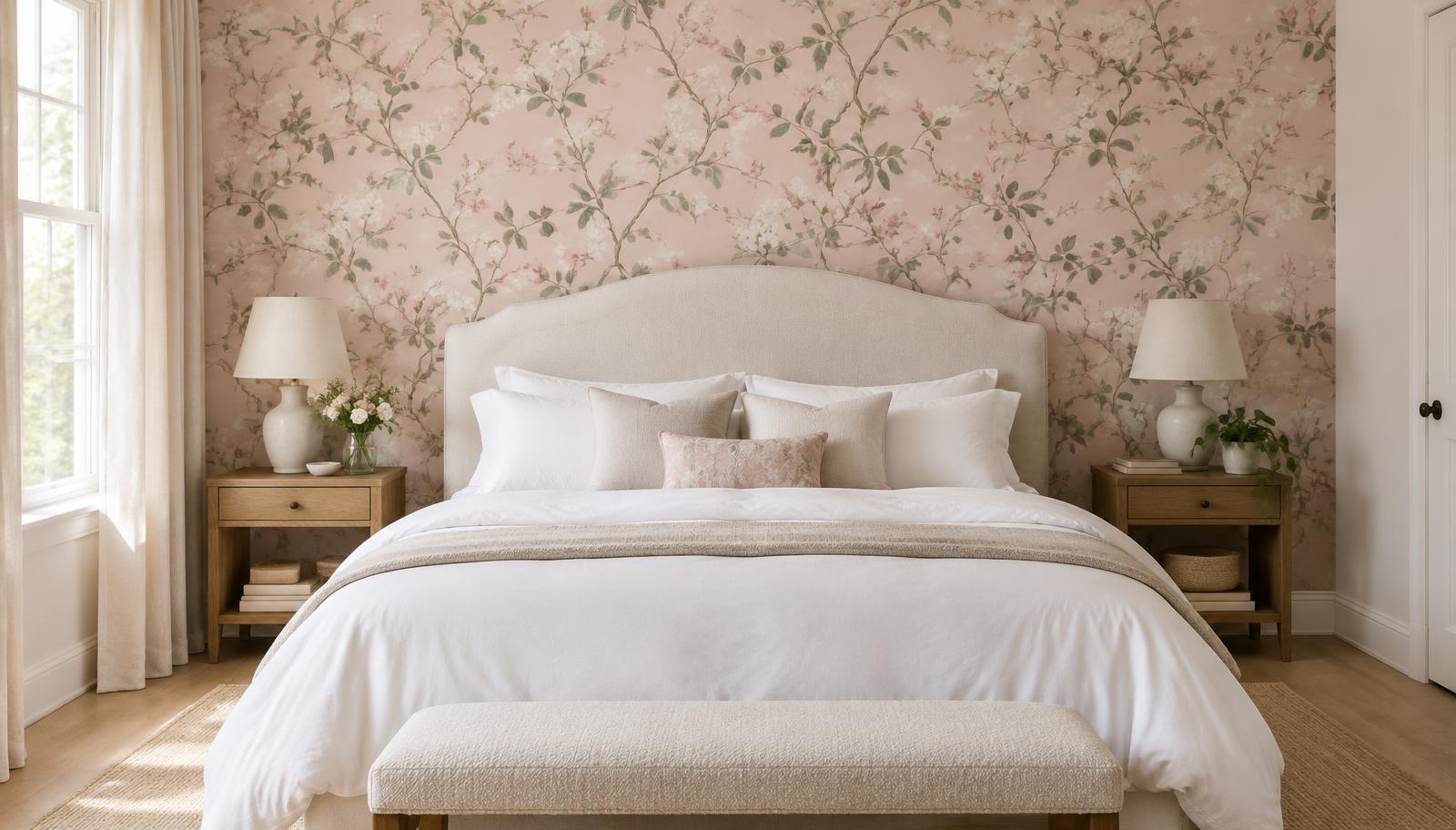
- Bedding: cream, oat and white keep the walls the star. For pattern ideas, see our pink bedroom wallpaper guide.
Mistakes that make pink walls disappointing
- Choosing from a tiny chip held up in a shop.
- Testing a sample next to old wall color, which distorts how it reads.
- Pairing a cool pink with yellow-toned flooring without checking them side by side.
- Using cool white bulbs, which can make warm pinks look muddy.
Softer shades are often chosen for bedrooms because of the calm associations people have with them; our article on the psychology of pink explains what research has and has not shown.
As an Amazon Associate I earn from qualifying purchases. This post contains affiliate links. I receive a small compensation from sales of certain items, at no extra cost to you. Read the affiliate disclosure.
Where to shop
These Amazon searches help with sampling and painting.
- Peel-and-stick paint samples: easy to move around
- Painter's tape: for clean two-tone lines
- Paint roller kits: for walls and trim
Listings on Amazon change often, so check the size, materials, care instructions and recent reviews on each product page before you buy.