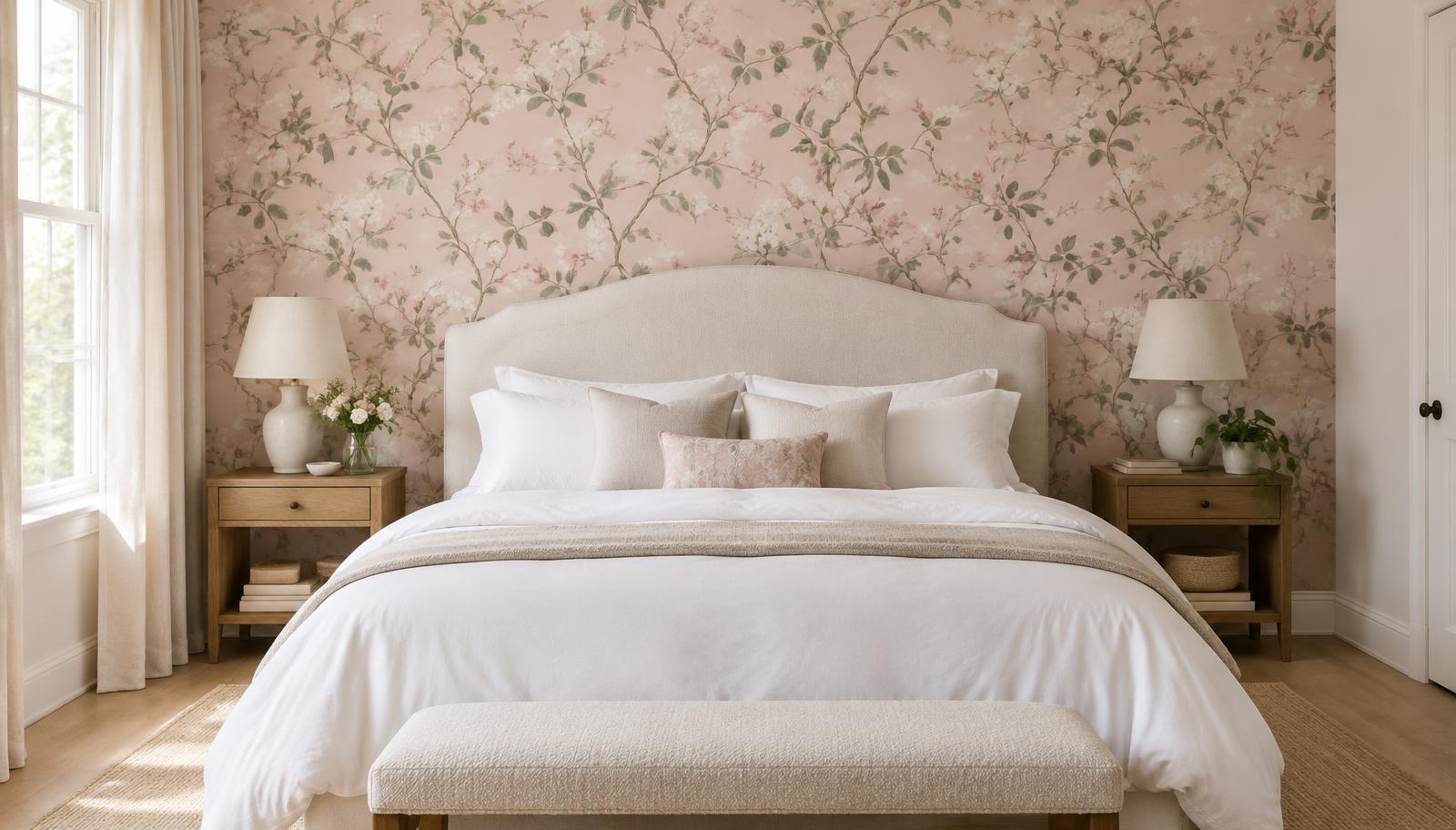
A pink bedroom can be calm, sophisticated and restful, far from the bright bubblegum many people picture. The trick is choosing the right shade and balancing it with grown-up materials. This guide covers color, bedding, materials and lighting.
The short answer
Choose a muted, slightly grey or earthy pink rather than a bright candy shade. Pair it with natural materials like wood, linen and rattan, add one deeper accent such as burgundy or olive, and use warm, low lighting.
Pick a grown-up pink
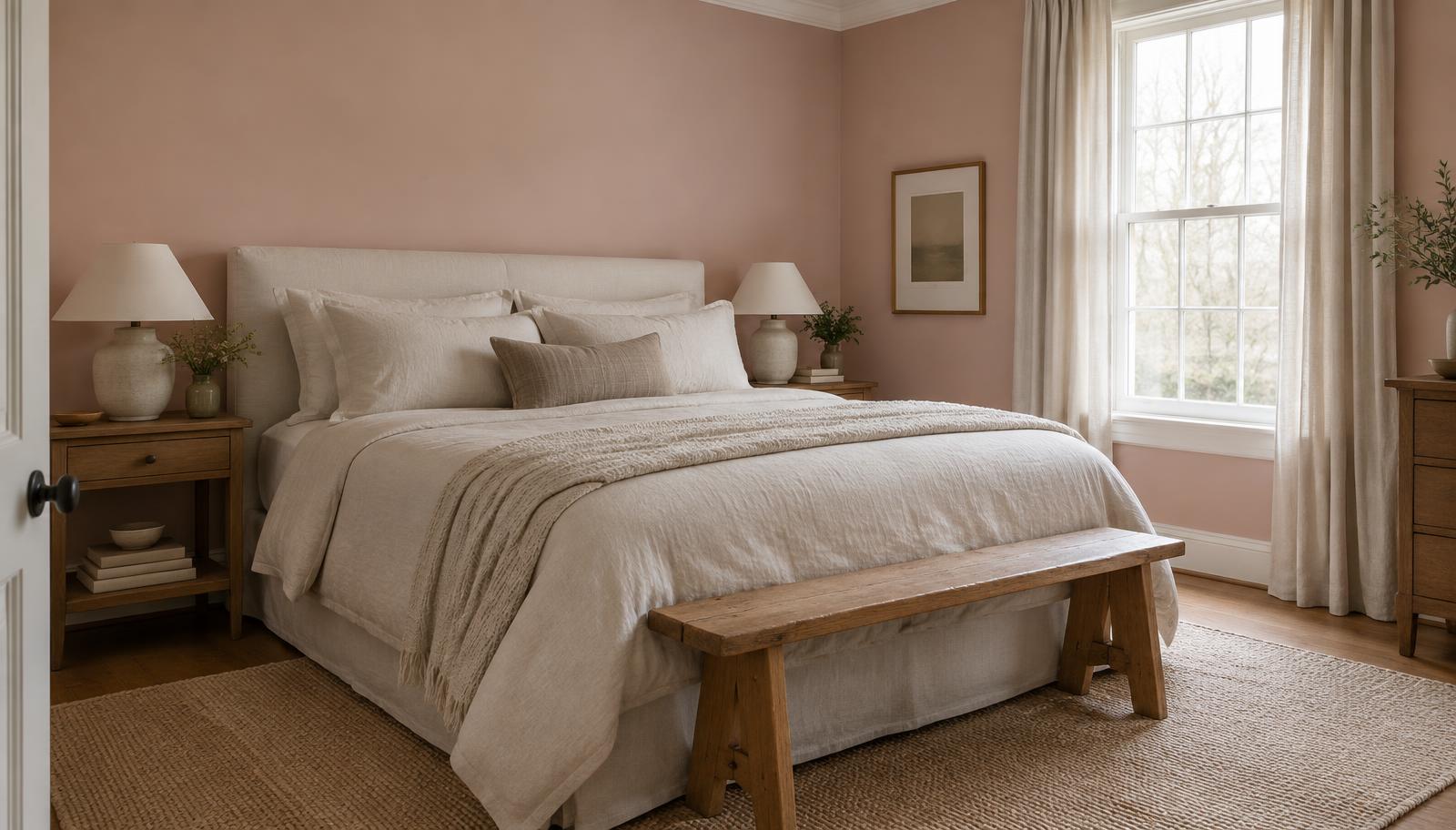
Muted pinks with a little grey, brown or beige in them tend to feel calm. Think plaster pink, dusty rose and terracotta pink. Bright pinks are energizing, which is not usually what a bedroom needs. Our article on the psychology of pink explains why softer shades tend to feel relaxing.
Balance with neutrals and texture
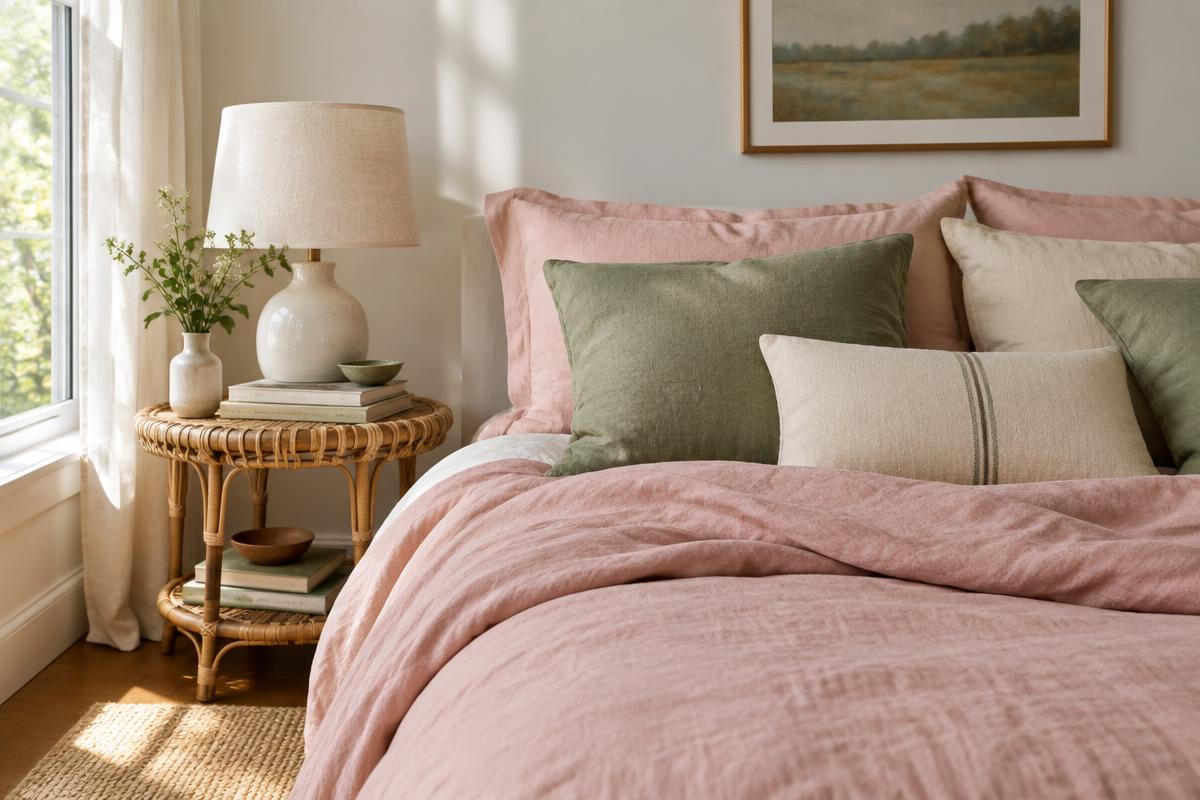
- Linen bedding in pink with cream and sage, as shown below.
- Wood and rattan furniture for warmth.
- Velvet and wool for depth.
- Art with natural tones rather than more pink.
Go darker for drama
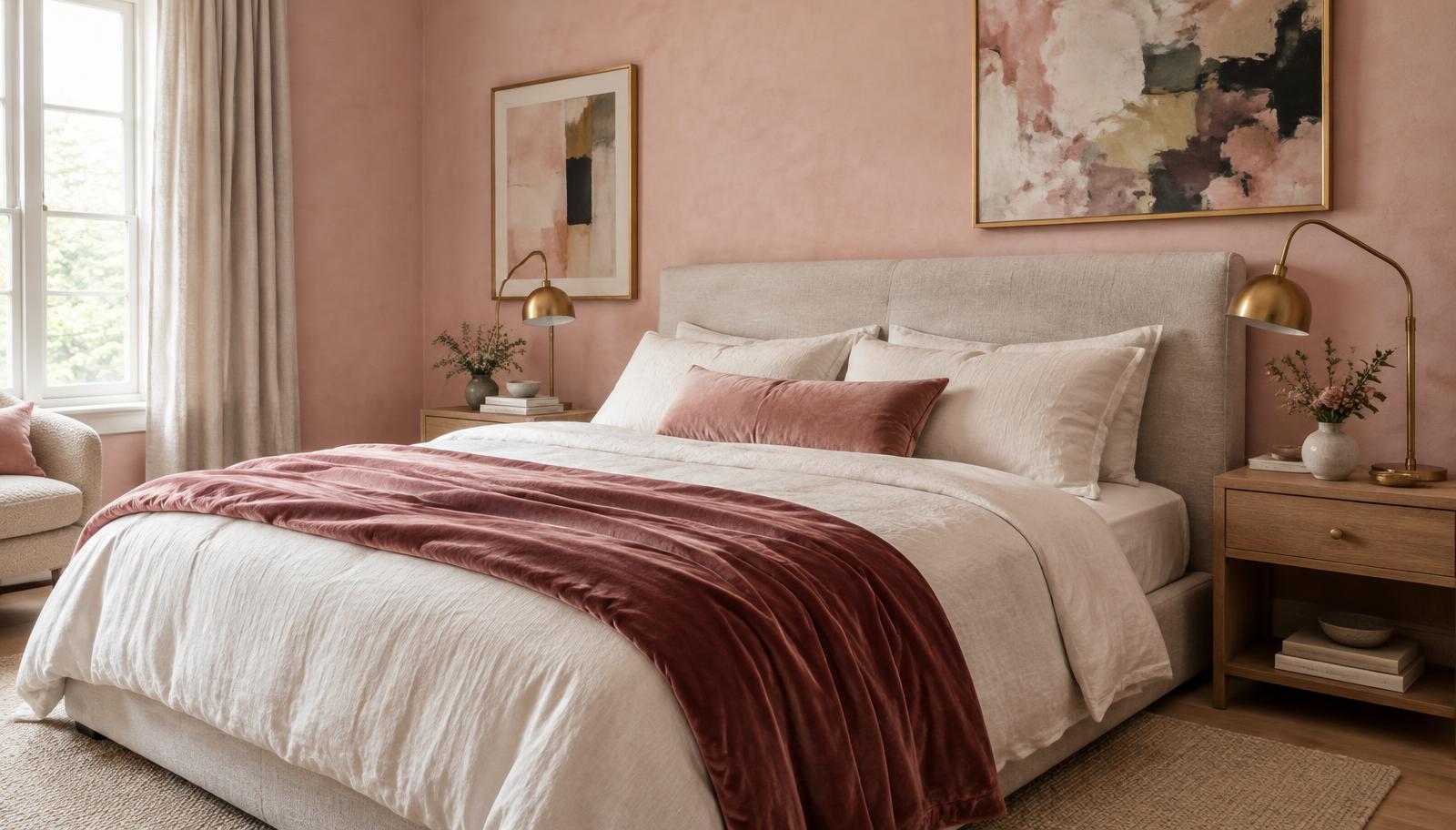
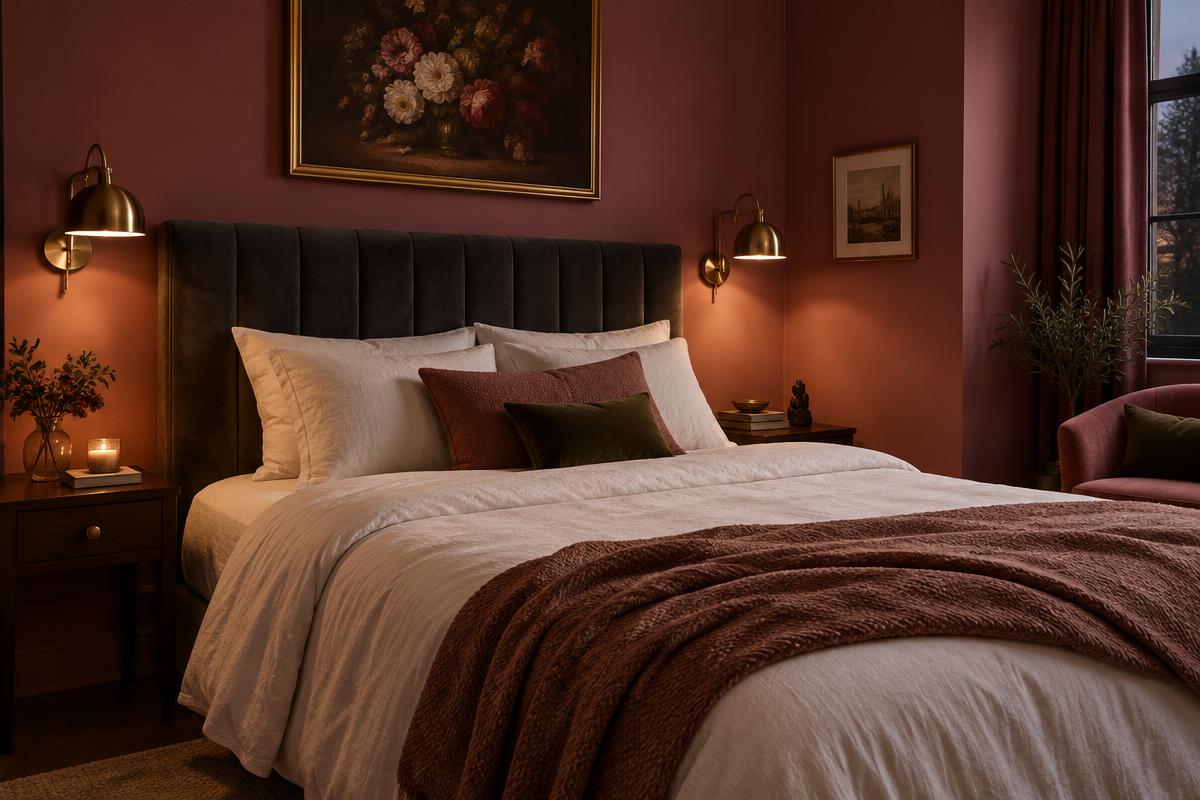
A deep berry or burgundy pink on the walls makes a bedroom feel enveloping, especially with dark wood and brass lamps, as shown below. It suits rooms used mainly at night.
Lighting
Warm white bulbs flatter pink walls. Use lamps rather than overhead lighting in the evening. Wall sconces free up nightstand space.
Avoiding a childish look
- Skip glitter, ruffles and cartoon motifs.
- Limit pink to two or three elements.
- Choose classic furniture shapes.
For children's rooms, see our separate guide on pink in kids' rooms.
Choose your pink by how you use the room
A bedroom that gets morning light
Pale plaster pink, warm blush and pink beige stay soft in daylight and do not compete with white bedding. Keep curtains light and unlined, or use linen, so the walls glow rather than turn flat. If you are unsure how a shade will behave, our guide to pink color terms helps you tell blush, rose and salmon apart before you buy samples.
A bedroom used mostly at night
Deeper rose, berry and muted raspberry feel enclosing under lamplight. They work best when the ceiling is a softened version of the wall color instead of bright white, which can look stark against a dark pink.
A small or shared bedroom
If the room is small, or you share it with someone less keen on pink, put the color where it reads as a choice rather than a theme: a pink headboard, a pink-backed bookshelf or a single painted wall behind the bed. Everything else stays cream, oat or soft grey.
Five combinations that look grown-up
- Dusty rose, cream and oak: the calmest option, and easy to add to over time.
- Blush, sage and natural linen: fresh without feeling sweet, as in the bedding shown above.
- Plaster pink, burgundy and brass: warmer and more tailored, close to the room at the top of this article.
- Terracotta pink, rust and rattan: earthy and relaxed.
- Berry pink, chocolate brown and velvet: moody and best for rooms used in the evening.
What works and what tends not to
Works: one main pink plus one deeper accent, mixed textures, solid wood or wood-look furniture, and art in earthy or neutral tones. A pink velvet chair or bench can carry the color on its own, and our pink velvet styling ideas show how to pair velvet with neutrals.
Tends not to work: several different pinks with no neutral in between, high-gloss pink furniture next to pink walls, and bright cool white overhead light, which can make muted pinks look grey or chalky.
Bedding and textiles
Bedding is the easiest place to test pink before painting. Start with a pink duvet cover and white or cream sheets, then add a throw in a deeper tone. Washed linen and cotton percale both suit a relaxed look; choose whichever feels better to you and check the care label, since some colored linens can fade with frequent hot washes. Rugs in faded or vintage-style pinks hide everyday wear better than solid pale pink.
A simple plan if you are starting from scratch
- Pick one main pink and test it on bedding or a large paint sample.
- Choose one accent color, such as burgundy, olive or rust.
- Add one natural material, like oak, rattan or linen.
- Switch to warm white bulbs and add at least one lamp.
- Live with it for a week before buying more pink.
The meaning people attach to the color can also guide the mood you want; our piece on pink color symbolism covers the associations behind softer and stronger pinks.
As an Amazon Associate I earn from qualifying purchases. This post contains affiliate links. I receive a small compensation from sales of certain items, at no extra cost to you. Read the affiliate disclosure.
Where to shop
These Amazon searches cover bedroom essentials.
- Pink linen duvet covers: check size and care
- Dusty pink throws: for layering
- Plug-in brass wall sconces: no hardwiring needed
Listings on Amazon change often, so check the size, materials, care instructions and recent reviews on each product page before you buy.
Next steps
For budget projects, see our DIY pink decor ideas.