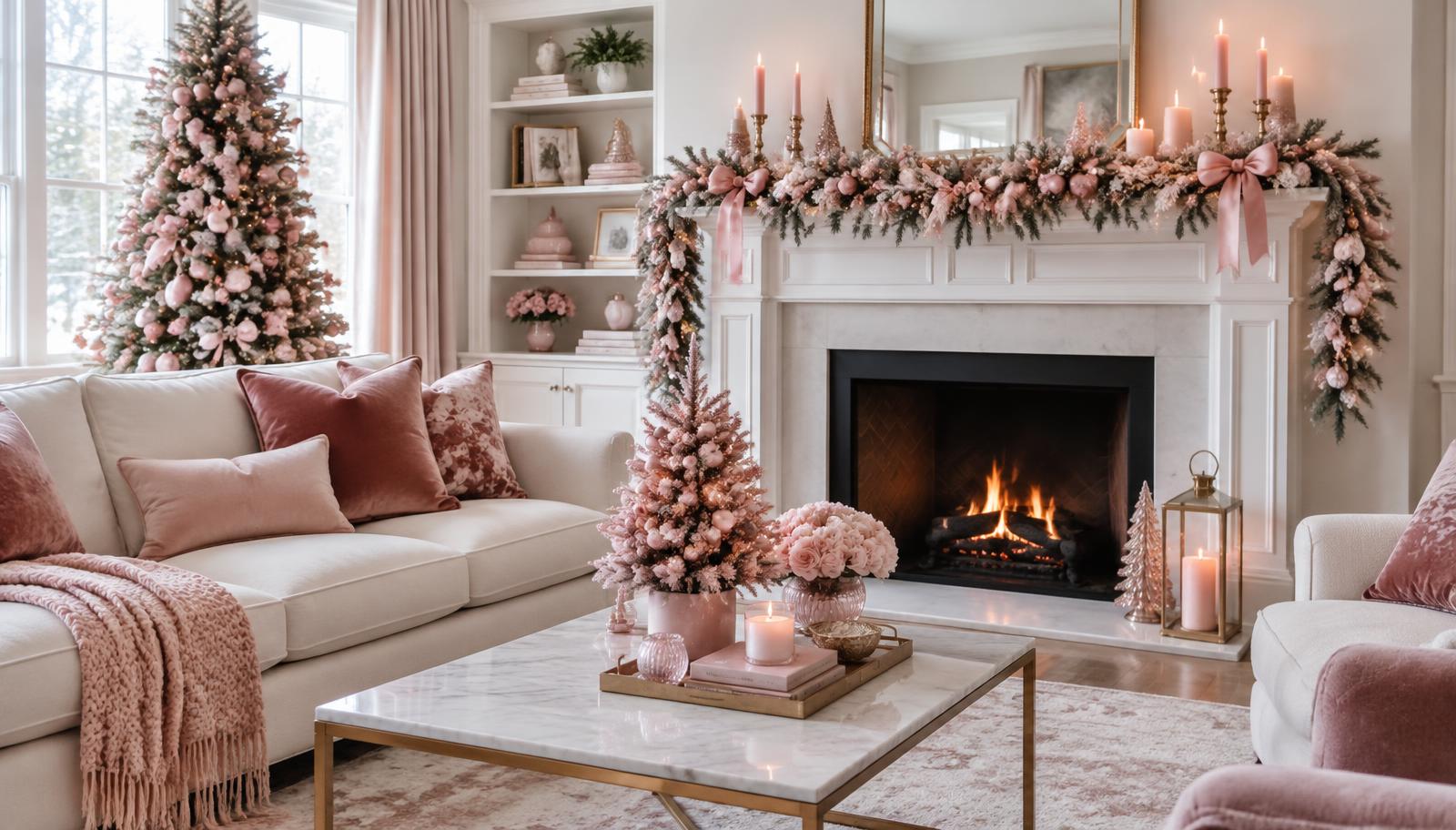
A pink Christmas tree can look soft and elegant or loud and chaotic, and the difference rarely comes down to how much pink you use. It comes down to a few decisions made before the first ornament goes on: what the tree itself looks like, which pink you commit to, and what you pair it with. This guide walks through those decisions in order so your tree feels intentional from every angle of the room.
The short answer
Choose one tree base (green, flocked or fully pink), pick one main pink plus one supporting tone such as gold, silver, cream or deep red, and repeat both colors in at least three different textures. Keep warm white lights unless you want a deliberately playful look. That combination is what makes a pink tree read as designed rather than overdone.
Start with the tree itself
There are three main routes, and each gives a very different result.
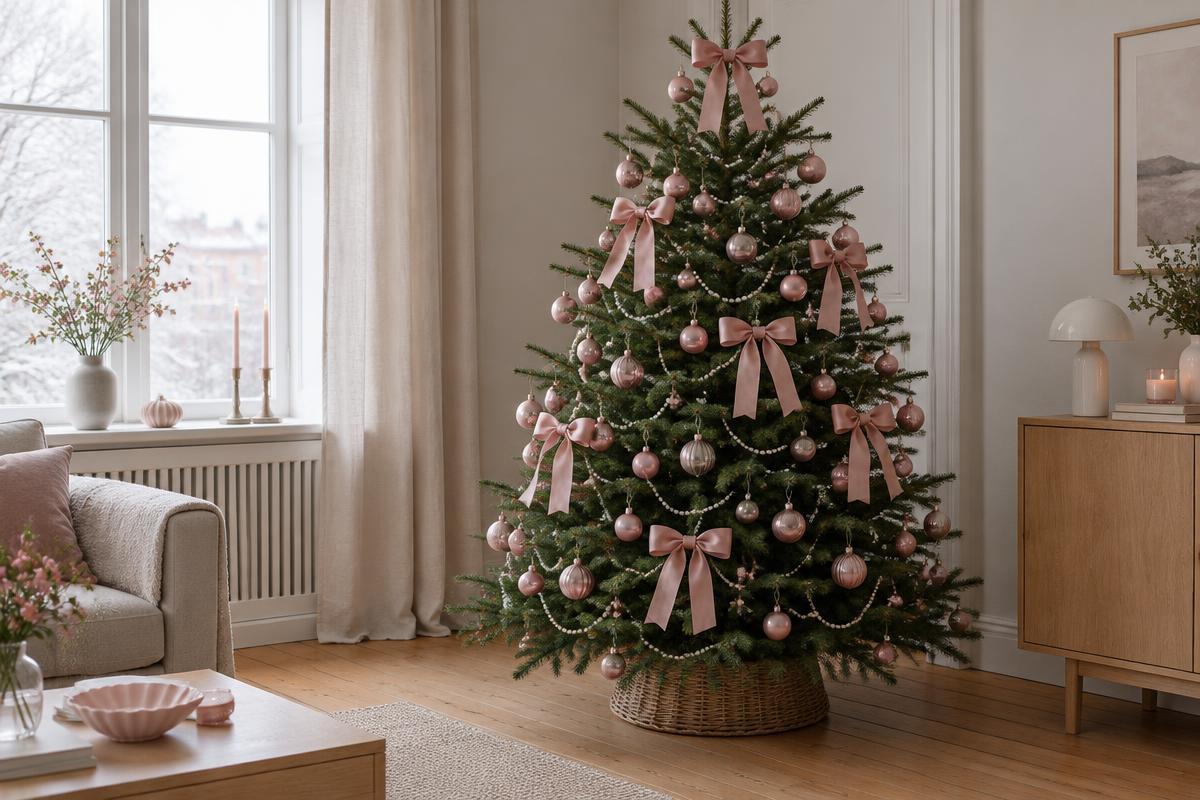
- A classic green tree with pink decorations. The easiest and most flexible option. The green softens the pink and keeps the tree feeling traditional. Blush, rose and dusty pink all work well against natural greenery.
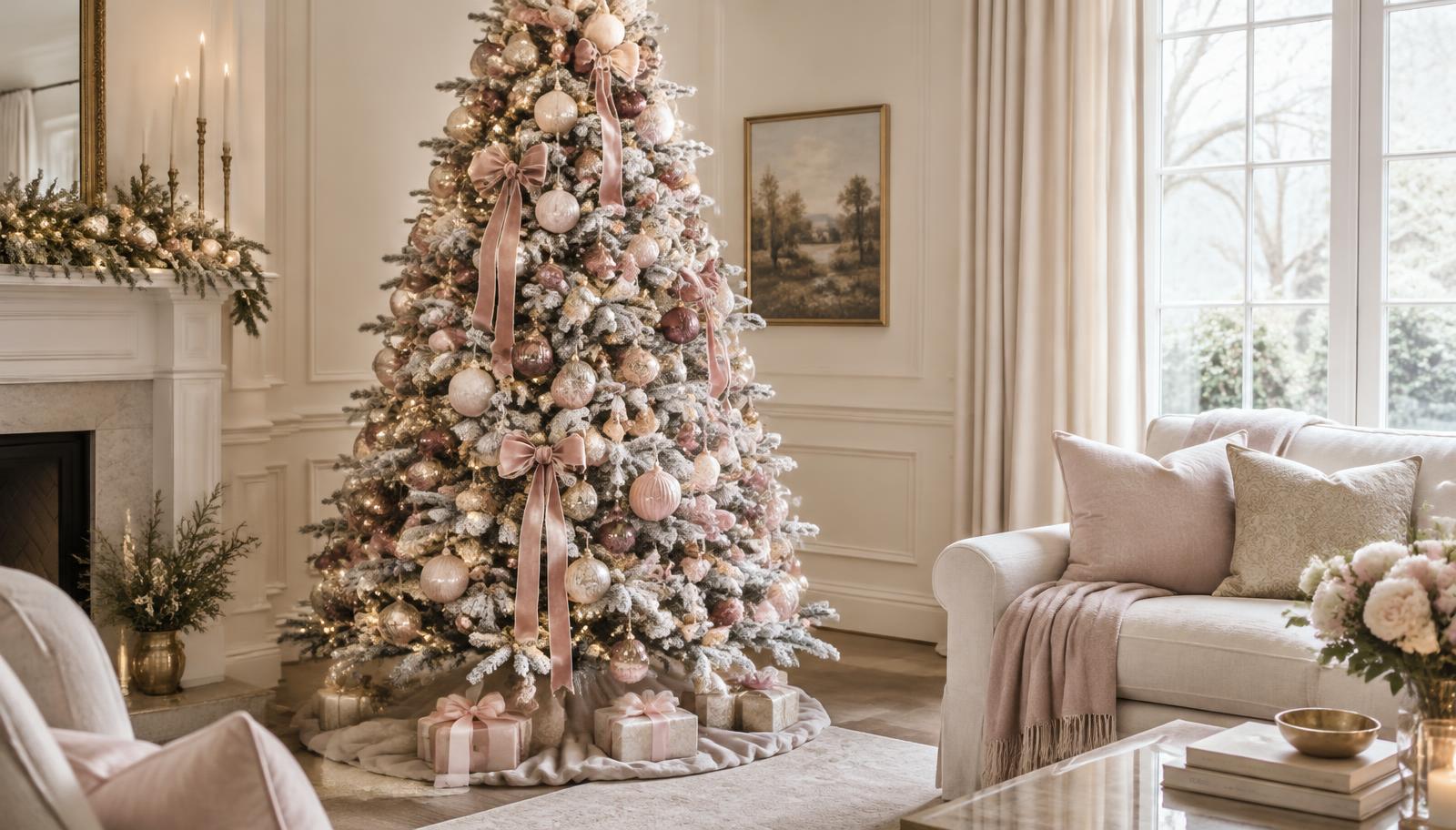
- A white or flocked tree with pink decorations. Flocking gives a snowy base that makes pastel ornaments glow. This is the route most people picture when they think of a dreamy pink tree, and it is the one shown at the top of this article.
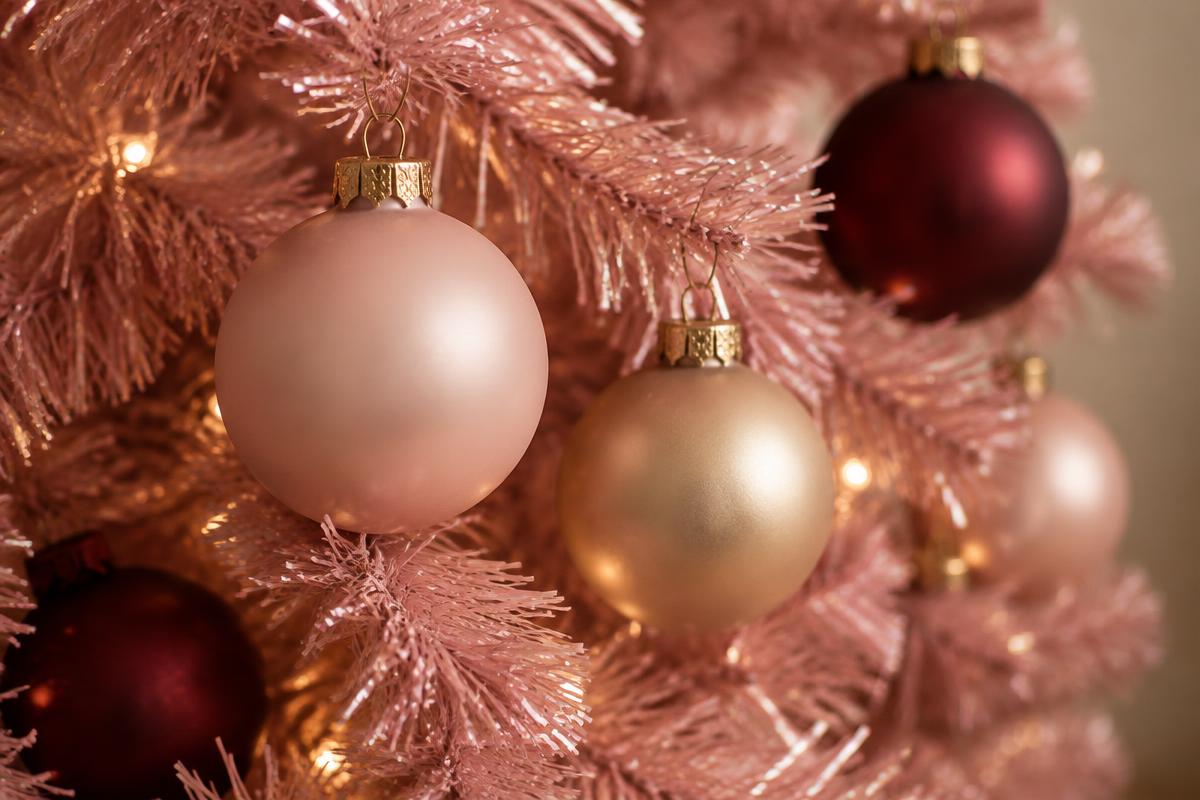
- A fully pink tree. The boldest choice. Because the branches already carry the color, keep ornaments simpler: gold, champagne, white and one deeper accent so the tree does not turn into a single wash of pink.
Pick one pink and one partner tone
Most overdone pink trees mix too many unrelated pinks. Choose one main shade and one supporting color, then let everything else stay neutral. If you want help naming shades, our guide to 50 shades of pink lists names and hex codes you can use as a reference when shopping.
- Blush and gold: warm, soft and classic. Works with cream rooms and wood floors.
- Rose and silver: cooler and a little more modern. Good with grey sofas and white walls.
- Dusty pink and deep burgundy: rich and grown up. The burgundy anchors the pink and adds depth in the evening.
- Hot pink and red: playful and bold. Works best when the rest of the room is calm.
Use a simple ornament ratio
A useful starting point is the 60/30/10 split that interior designers often use for color. Roughly 60 percent of ornaments in your main pink, 30 percent in the supporting tone and 10 percent in a contrast accent such as burgundy, white or clear glass. It does not need to be exact. The point is to give the eye a dominant color, a partner and a small surprise.
Size matters too. Hang the largest ornaments deeper inside the branches to fill gaps and add depth, medium ones in the middle layer and small ones near the tips. Working from the inside out keeps the tree from looking flat.
Texture does more than quantity
If your pink tree looks one-note, add texture before adding more color. Mix finishes so the same pink appears in several forms:
- Matte and satin ornaments next to a few glossy ones
- Velvet or satin ribbon bows in place of some baubles
- Glass, felt and ceramic shapes in the same shade
- A string of pearl or bead garland draped loosely across the branches
Ribbon in particular is an easy way to make a tree feel styled. Long bows tied at intervals, or ribbon tails tucked vertically from the top down, add movement without adding clutter.
Keep the lights warm
Warm white lights are the safest choice with pink because they flatter blush and rose tones and keep the tree cozy at night. Cool white lights can make soft pinks look grey. Pink string lights are fun, but they tint every ornament the same color, so use them on their own or as a small accent rather than mixing them with pink decorations everywhere.
Finish with the topper and base
A large bow, a simple star in gold or champagne, or a cluster of ribbon loops all work as toppers. Avoid a topper in a completely new color. At the base, a cream, white or faux fur skirt keeps the look light, while a woven basket collar suits a more natural, Scandinavian feel. Wrapping a few gifts in the same palette is the easiest way to tie the floor level to the tree.
Common mistakes to avoid
- Too many pinks at once. Stick to one main shade and treat others as accents.
- Everything the same size. Mix large, medium and small pieces.
- Ignoring the room. Repeat the tree colors in one or two nearby spots, such as a cushion or a candle, so the tree belongs to the space.
- Decorating only the front. Turn the tree as you go, especially if it is visible from more than one side.
As an Amazon Associate I earn from qualifying purchases. This post contains affiliate links. I receive a small compensation from sales of certain items, at no extra cost to you. Read the affiliate disclosure.
Where to shop
If you are starting from scratch, these Amazon searches are a practical place to compare options.
- Pink and flocked Christmas trees: compare heights, tip counts and whether lights are pre-strung
- Blush pink ornament sets: look for shatterproof options if you have pets or children
- Pink velvet ribbon for trees: wired ribbon holds bows and tails in shape
Listings on Amazon change often, so check the size, materials, care instructions and recent reviews on each product page before you buy.
Keep going
Pink holiday decor does not have to stop at the tree. Our budget DIY pink home decor ideas include easy projects that carry the palette into the rest of the room, and our pink gift guide has ideas for what to put underneath it.