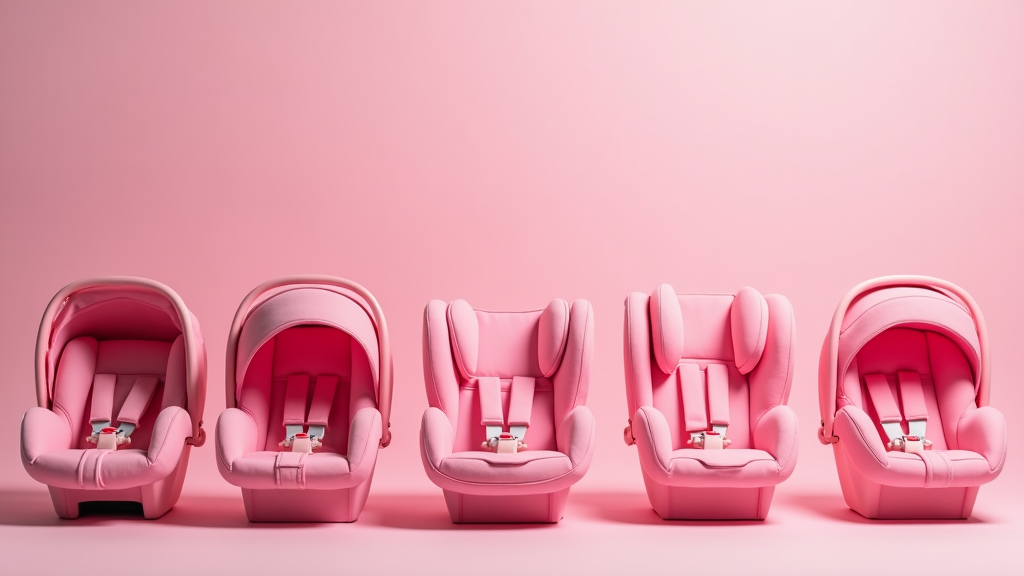
Pink infant car seats can make baby gear feel more personal, but color should be the final filter, not the first. This guide is informational and does not rank seats by safety or report hands-on testing. Models, fabrics and specifications change, so use it to build a checklist rather than as a substitute for a current manufacturer manual.
How to choose a pink car seat responsibly
Start with the correct seat type for your child’s age and size, then check whether it can be installed correctly in your vehicle. The National Highway Traffic Safety Administration car-seat guide explains the general progression from rear-facing seats to forward-facing seats and boosters. Always follow the limits and instructions printed on the exact seat and in its manual.
- Child fit: verify the manufacturer’s current height and weight limits and harness-position instructions.
- Vehicle fit: check your vehicle manual and the car-seat manual before choosing an installation method.
- Installation: follow the current instructions exactly. If you want help, use NHTSA’s inspection-station finder to locate trained assistance.
- Recall status: search the exact model through the NHTSA recall database and register a new seat with its manufacturer.
- Condition and history: examine all parts and labels. For a used seat, confirm its history, instructions, expiration information and whether it has been involved in a crash.
Where pink fits into the decision
Once a seat meets your practical requirements, compare available colorways for that exact model. A pink cover, insert or trim does not change the need for correct fit and installation. Do not add unapproved covers, padding or accessories merely to create a pink look; use only items permitted by the car-seat manufacturer.
What to verify on a product page
Retail listings can become outdated or combine several versions on one page. Before buying, match the model name and model number across the retailer listing, manufacturer page and manual. Confirm the following details directly rather than relying on an older roundup:
- the seat type and permitted direction of travel
- the child height and weight limits for each mode
- the installation methods allowed for your vehicle
- the harness, recline and headrest instructions
- whether the pictured pink fabric is available for that exact model
- cleaning directions and whether the cover is removable
- the date of manufacture, expiration information and recall status
Installation and everyday use
Read both manuals before installation. A feature described as simple or convenient does not guarantee a correct fit in every vehicle. After installation, follow the manufacturer’s checks for movement, angle and harness placement each time the seat is used. Do not rely on a photograph, customer review or generic tutorial when it conflicts with the current manual.
For broader guidance, the American Academy of Pediatrics maintains a car-seat information guide for families. Questions about a specific child or medical need should be discussed with an appropriate professional.
Questions to ask before buying
Is this pink seat the right type for my child?
Check the current manufacturer limits and instructions for the exact model. Age alone is not enough to establish fit.
Will it fit my vehicle?
Vehicle fit cannot be confirmed from a roundup. Compare both manuals and, when possible, test the installation before committing to a seat.
Does a safety label make one seat the safest?
No single label or marketing phrase proves that a seat is the safest choice for every child and vehicle. Correct selection, installation and use matter, and this article does not make safety rankings.
Can I use a separate pink cover or insert?
Only use covers, padding and accessories allowed by the manufacturer for the exact model. Unapproved additions can interfere with fit or use.
Bottom line
Use pink as a style preference after confirming the essentials: the right seat type, correct child and vehicle fit, current instructions and no open recall. Because models and requirements change, verify every product-specific detail with the manufacturer and relevant regulator before purchase and use.