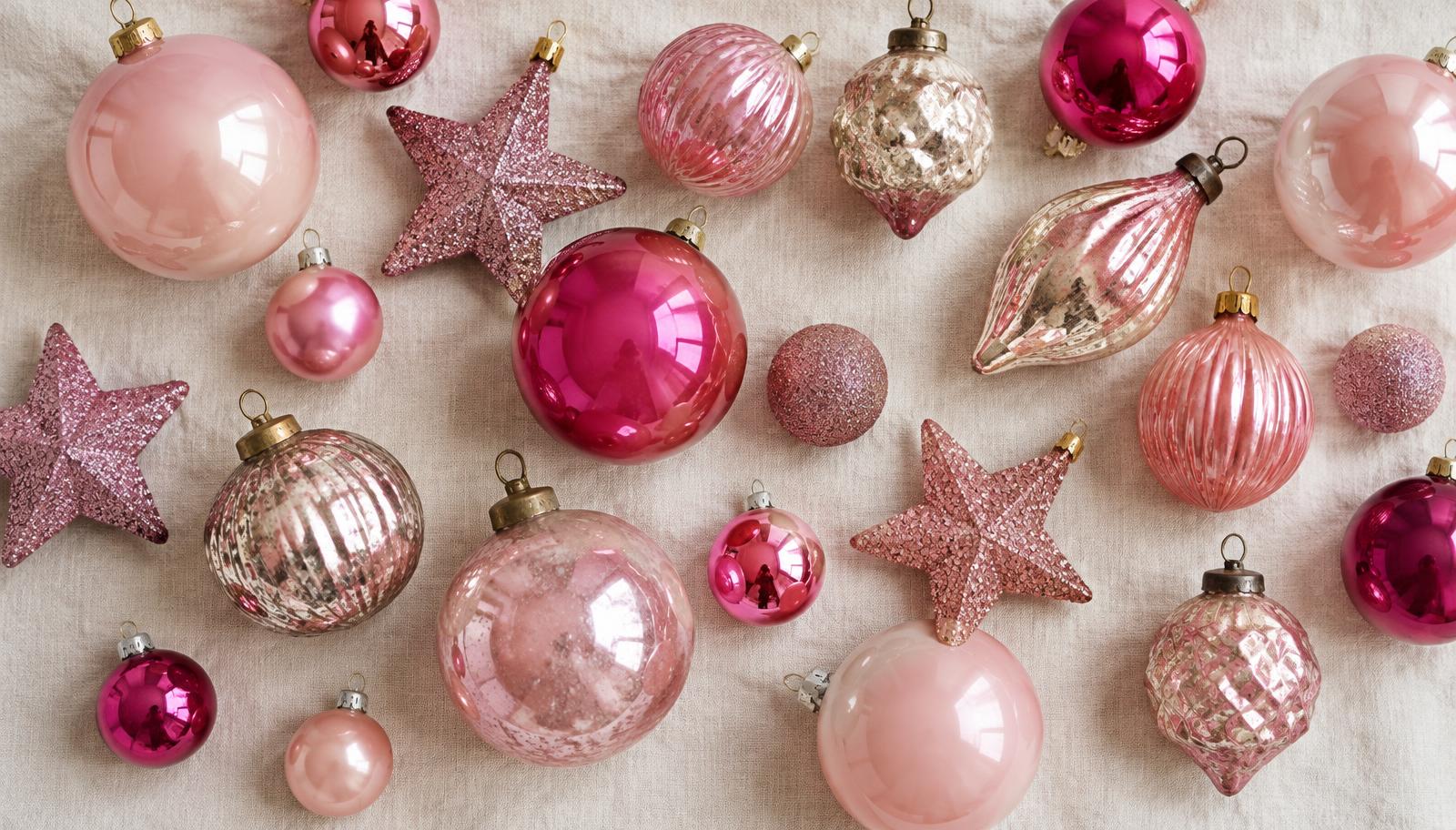
Ornaments do most of the work on a pink tree. They decide which pink shows up, how much sparkle there is and whether the tree looks curated or random. This guide covers the main ornament materials, how to combine pink shades, and how to build a set that works this year and still fits next year.
The short answer
Build around one main pink in two or three finishes (for example matte, shiny and glitter), add a smaller number of ornaments in a supporting color such as gold, silver or burgundy, and include a few interesting shapes. Shatterproof ornaments are the practical choice for low branches and homes with pets or children.
Ornament materials compared
- Glass: the classic look with real depth and shine. Glass is fragile, so hang it higher and away from busy walkways.
- Shatterproof plastic: lightweight and forgiving. Many sets now come in matte, glossy and glitter finishes that look similar to glass from a distance.
- Mercury glass: slightly worn, silvered glass with a vintage feel. A few pieces add character to a modern set.
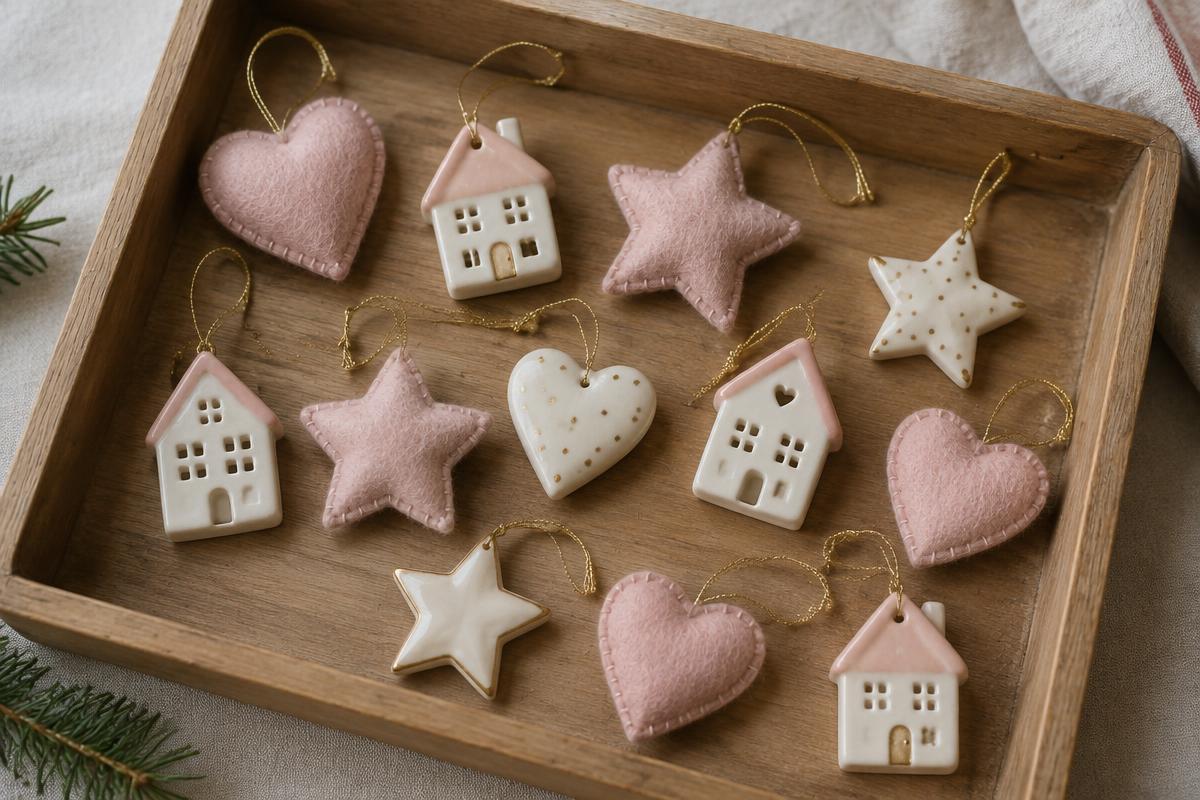
- Felt and fabric: soft, cozy and safe for low branches. Felt hearts and stars suit Scandinavian and cottage styles.
- Ceramic and porcelain: small houses, stars and hearts in white with pink details look delicate and pair well with simple greenery.
Which pinks go together
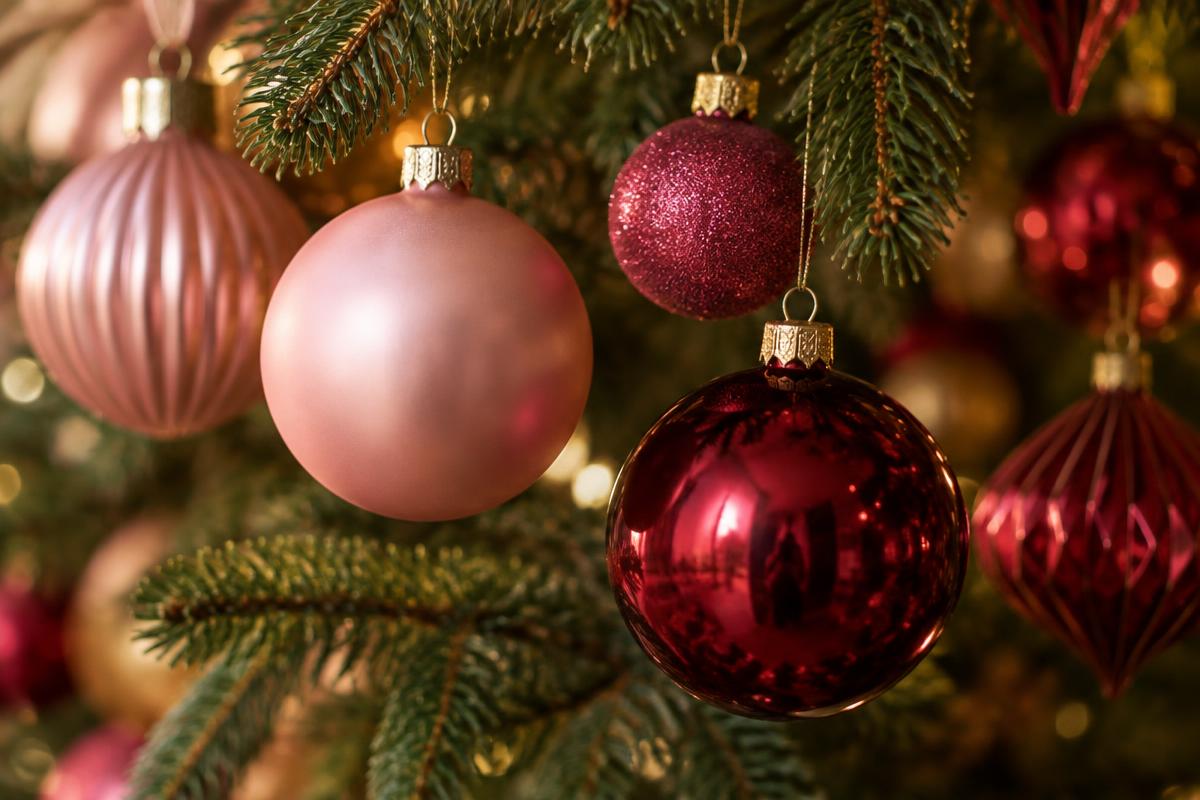
Pinks fall roughly into warm shades (with peach or coral in them) and cool shades (with blue or purple in them). Mixing within one family tends to look calm. Mixing across families can work, but it needs a bridge color.
- Calm and soft: blush, ballet pink and champagne
- Rich and warm: dusty rose, mauve and burgundy
- Bright and festive: fuchsia, hot pink, red and gold
- Cool and modern: pale pink, silver and clear glass
For exact shade names, our pink color terminology glossary explains the difference between terms like blush, rose and mauve.
Shapes add interest
A tree hung only with round baubles can look flat. Mix in some of these shapes, in the same colors you already chose:
- Finials and teardrops for vertical lines
- Ribbed or fluted balls that catch light differently
- Stars, hearts and snowflakes
- Small houses or bells for a nostalgic touch
How many ornaments do you need?
There is no fixed rule, and the right number depends on the size of the ornaments and how full you like the tree. A practical approach is to buy one mixed set in your main pink, decorate with it first, then step back. Fill obvious gaps with a second, smaller set in the supporting color rather than buying everything at once. Ribbon, garland and picks also fill space, so you often need fewer ornaments than you expect.
Hanging tips
- Put the largest ornaments in first, deeper in the tree.
- Spread each color in a loose zigzag rather than in rows.
- Keep fragile pieces at eye level or above.
- Use ornament hooks that close fully on heavier pieces.
Storing them for next year
Divided storage boxes keep glass from knocking together. Wrap the most delicate pieces in tissue, and keep a note of which set went where, so next year's tree starts faster.
As an Amazon Associate I earn from qualifying purchases. This post contains affiliate links. I receive a small compensation from sales of certain items, at no extra cost to you. Read the affiliate disclosure.
Where to shop
These Amazon searches are a good starting point for building or topping up a pink set.
- Pink shatterproof ornament sets: mixed finishes in one box make a cohesive base
- Pink glass ornaments: for the upper, safer branches
- Pink felt ornaments: soft pieces for low branches
Listings on Amazon change often, so check the size, materials, care instructions and recent reviews on each product page before you buy.
Related reading
See our pink Christmas tree ideas for how ornaments fit into the overall tree, and our room-by-room pink Christmas decor guide for using spare ornaments around the house.